Visiting Barrio 23 de Enero in Caracas: Discovering the Stronghold of Chávez and Maduro

Last updated on April 21, 2026
23 de Enero probably isn’t the first attraction that comes to mind when you think of Caracas. IOn the contrary, this mix of towering housing blocks and rundown neighborhoods is better known for its rough reputation — once as a hotbed of crime, and today for its politically driven Colectivo gangs. It’s no coincidence that Hugo Chávez’s final resting place lies here. It was from 23 de Enero that he launched his first coup attempt in 1992, and both he and his successor, Nicolás Maduro — abducted by the United States in January 2026 — are celebrated on nearly every corner.
It’s no surprise, then, that things got a bit tense here during the January 2026 events. By now, the mood in Venezuela has cooled down somewhat, and I was able to visit 23 de Enero quite peacefully in March 2026. Here’s what I discovered.
What's the Story Behind 23 de Enero?
The original barrio around 23 de Enero existed long before the large-scale housing project launched by the right-wing government of Marcos Pérez Jiménez. On the hillsides in western Caracas, homes built by newly arrived workers spread in a rather haphazard way. Under Pérez’s rule, a massive urbanization project was planned — and the buildings were meant to rise straight into the sky.
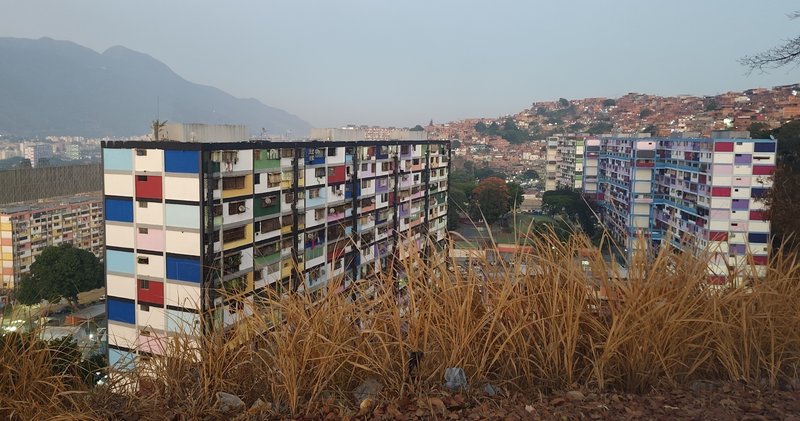
The man behind the neighborhood — then still called Urbanización Diciembre 2 — was Guido Bermúdez, who drew heavy inspiration from Le Corbusier’s Cité Radieuse. The result was dozens of housing blocks designed to include everything residents might need in daily life — from apartments to playgrounds and shops right outside their doors.
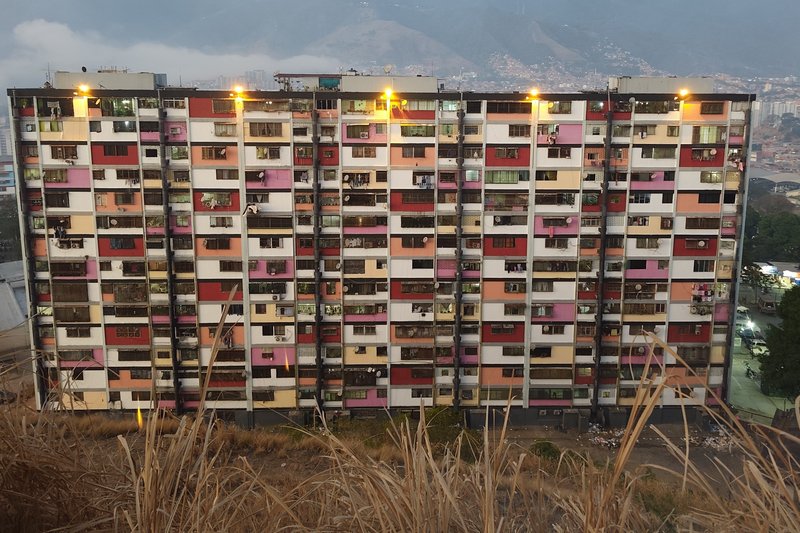
Ironically, the neighborhood later received the name 23 de Enero — January 23rd — commemorating the day Marcos Pérez Jiménez was overthrown in a coup. Since then, the barrio has taken a decidedly leftist path. It became the birthplace of Venezuelan Socialismo and a stronghold of Hugo Chávez’s movement. That spirit is especially visible in the many murals, whose eclectic left-wing style recalls places like the Bogside in Derry, Northern Ireland.
What's There to See in Barrio 23 de Enero?
There’s a lot to discover here — above all, leftist culture surrounded by classic barrio vibes and brutalist residential blocks inspired by Le Corbusier. Between communes and graffiti, you’ll also find military facilities and the mausoleum of Hugo Chávez, which once served as a military museum.
The Upper Barrio - Territory of La Piedrita and Other Colectivos
From the Plaza Bolívar in 23 de Enero, a gate marked Comuna Socialista Simón Bolívar leads you uphill into the upper part of the neighborhood. This area has grown naturally — and somewhat chaotically. Instead of high-rise blocks, you’ll see a maze of houses built haphazardly, side by side.
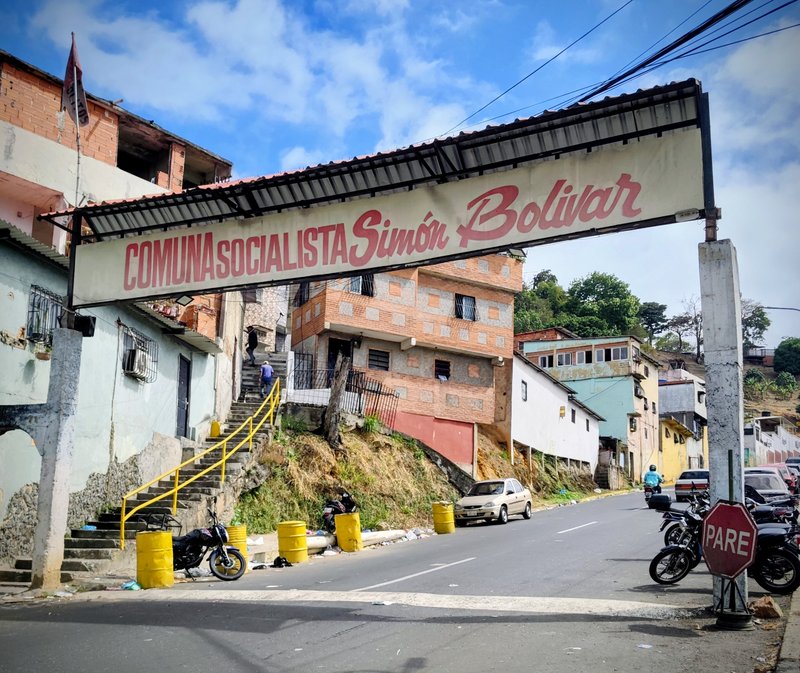
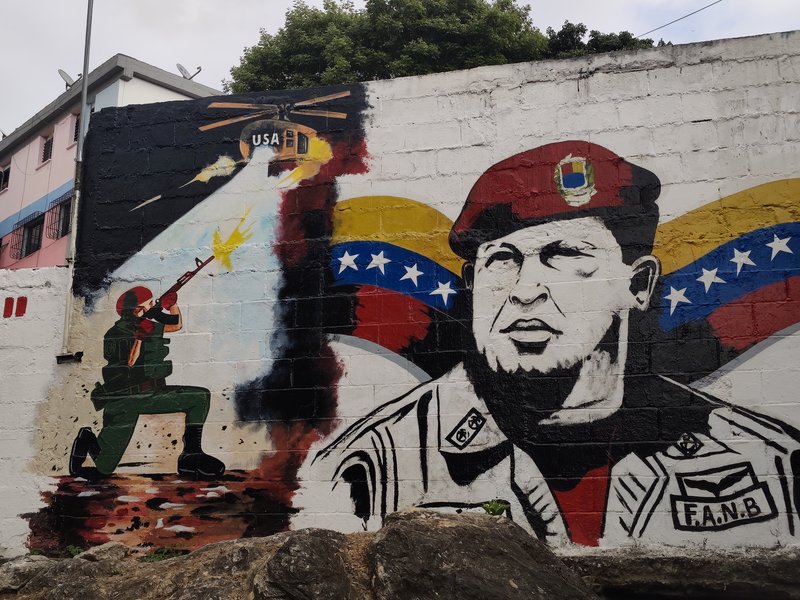
This area is the territory of several colectivos — most notably the group La Piedrita, which marks its presence through tags and slogans on the walls. As you make your way uphill, you’ll spot numerous murals, many of them devoted to glorifying Chávez. The relatively poor community of 23 de Enero initially benefited from his reforms and now looks back on that period with a strong sense of nostalgia.
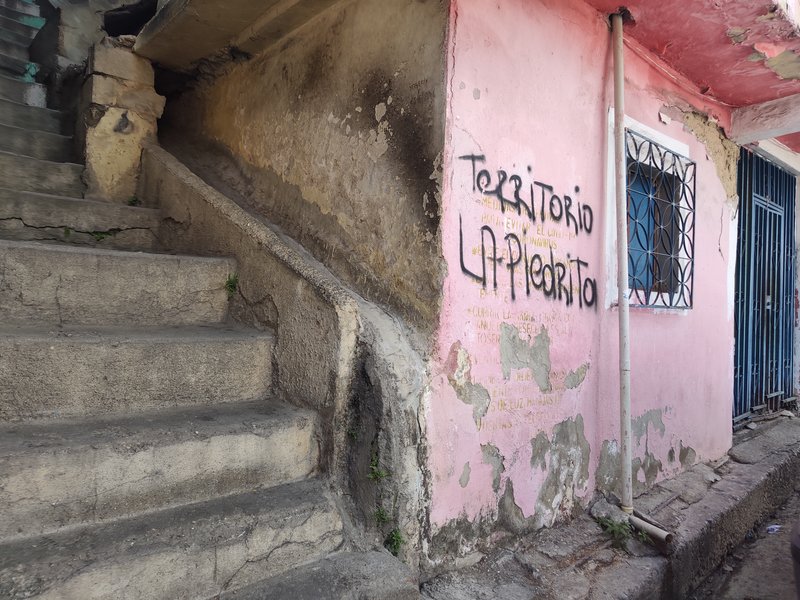
The area is divided into socialist communes that organize themselves but are also closely monitored by the colectivos. In theory, these groups are meant to keep an eye on crime; in practice, they’ve also been known to intimidate or even attack those who think differently. During anti‑government demonstrations, colectivos have repeatedly confronted protesters — on several occasions with deadly consequences.
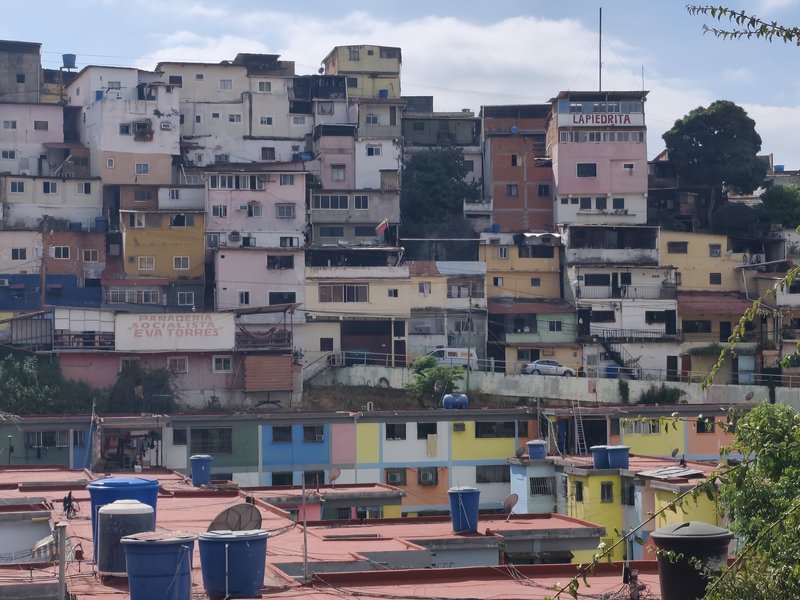
For that reason, I’m not entirely sure how wise it really is to wander into the inner barrios straight from the main road. Still, it doesn’t hurt to ask. There’s usually a gate or checkpoint where colectivos in civilian clothes keep watch, sizing up anyone who tries to enter.
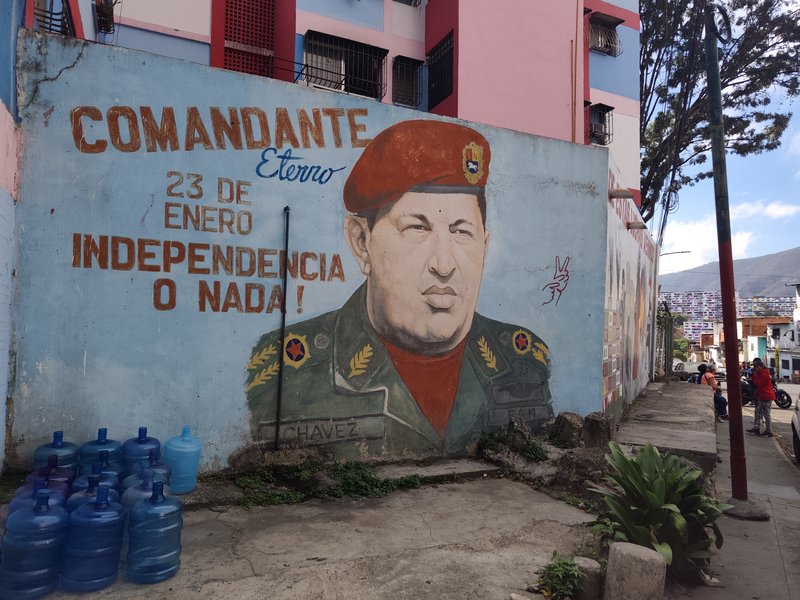
As you walk uphill, you’ll see large Chávez murals on the walls to your left. Just behind them lies a military barracks — reportedly one of the sites struck by U.S. forces on January 3, 2026. So it’s best to stay cautious here and avoid taking photos too openly.
Modernist Housing Blocks: From Le Corbusier to Socialist Ideas
The massive apartment blocks were a project of modernist architecture, and their bold, brutalist design has become an attraction in its own right. Rising above the traditional hillside homes, they form a striking visual contrast. At some point, someone had the idea to replace the old grey façades with colour — and now each block has its own distinctive pattern. The squares are painted in gradients of a single hue mixed with white, giving the buildings a vivid look in shades of orange, blue, or green.
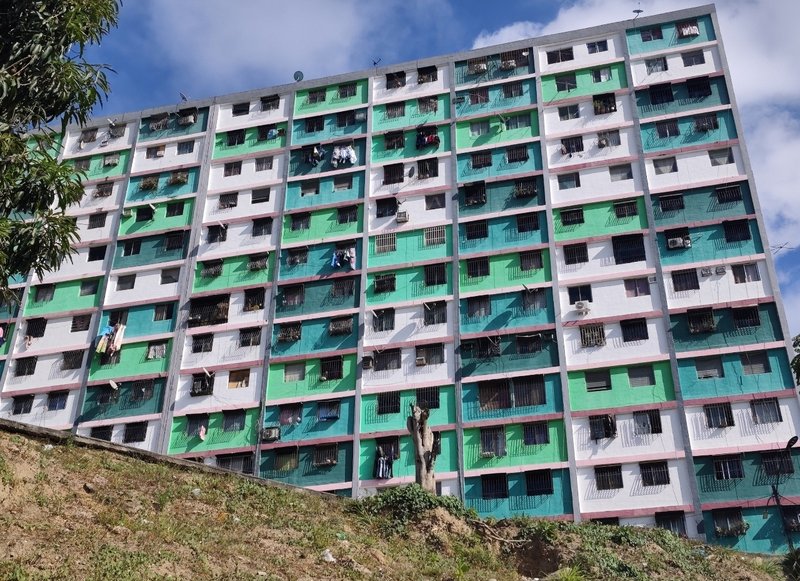
What began decades ago as a rather right‑wing nationalist project gradually evolved into a center of Socialismo. Back in 1992, Chávez found support here for his attempted coup, and over time, socialist communes also took root within the high‑rises. Compared to the colectivos in the upper barrio, it’s easier here to take a peek behind the scenes and wander in through the unguarded entrances.
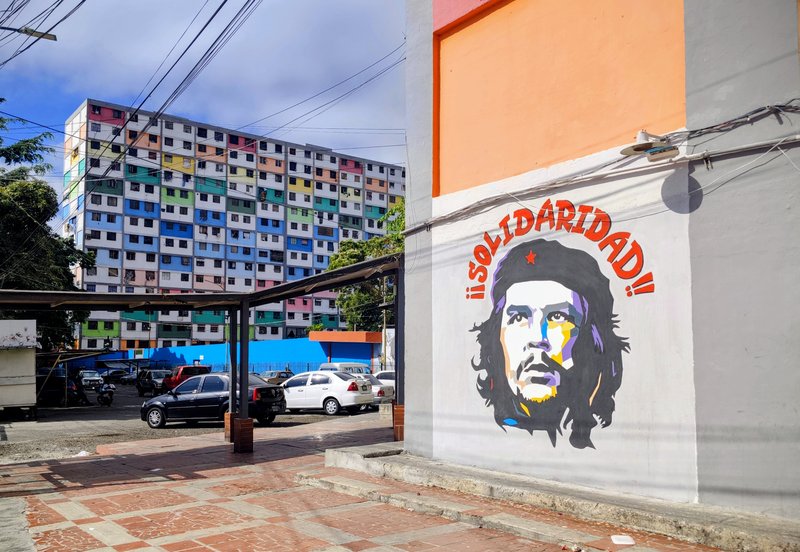
In the courtyards and on the walls here too, you’ll find large murals — often depicting Che Guevara or Chávez. Alongside them are bold socialist slogans like “Nosotros Venceremos” (“We will prevail”) and the names of the individual comunas painted prominently. The apartment blocks of 23 de Enero are therefore fascinating not only from an architectural point of view but also as a window into Venezuela’s political culture.
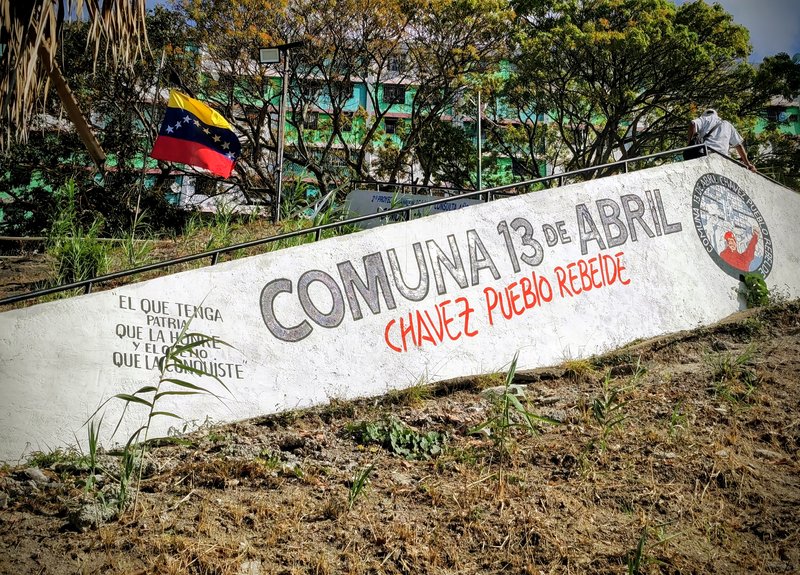
Left Murals, From Che Guevara to Bobby Sands
As you wander through 23 de Enero, it’s hard not to think of other left‑wing strongholds like the Bogside in Derry, Northern Ireland. What stands out most is the almost random kind of leftist eclecticism — as if anything even vaguely anti‑imperialist were fair game to be painted boldly across the walls.
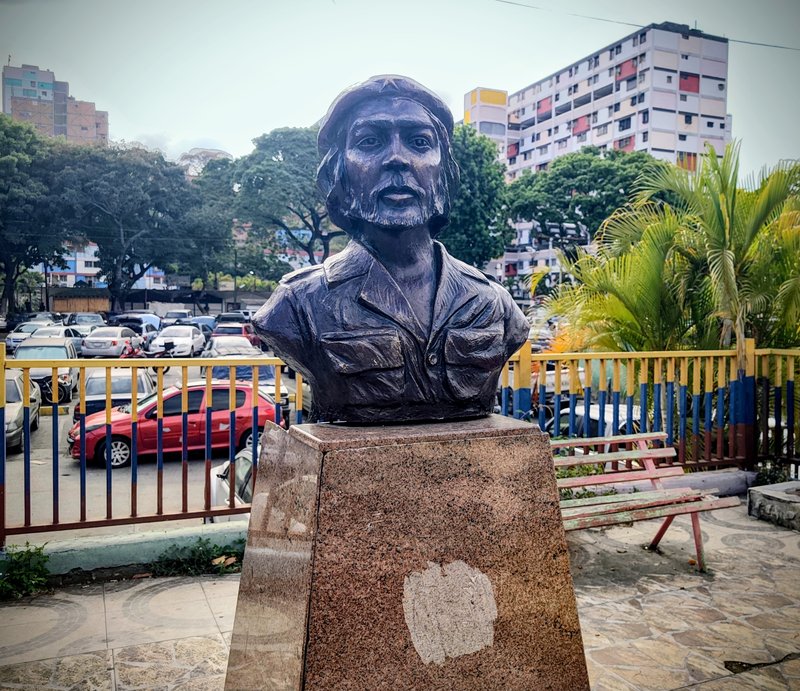
While the appearances of Che Guevara — thanks to his Cuban connection — or even IRA icon Bobby Sands still make some sense, the nods to Russia and Iran are more puzzling. After all, Russia projects imperial power within its own declared sphere of influence, and Iran isn’t exactly known for feminist or progressive social policies. The juxtaposition of Chávez alongside Revolutionary Guards, Jesus, and the Imam Mahdi feels, to put it mildly, rather surreal.
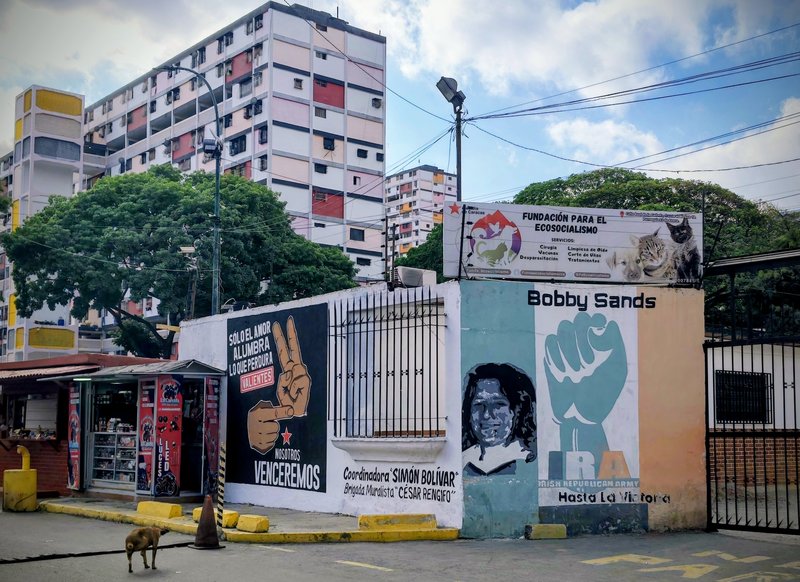
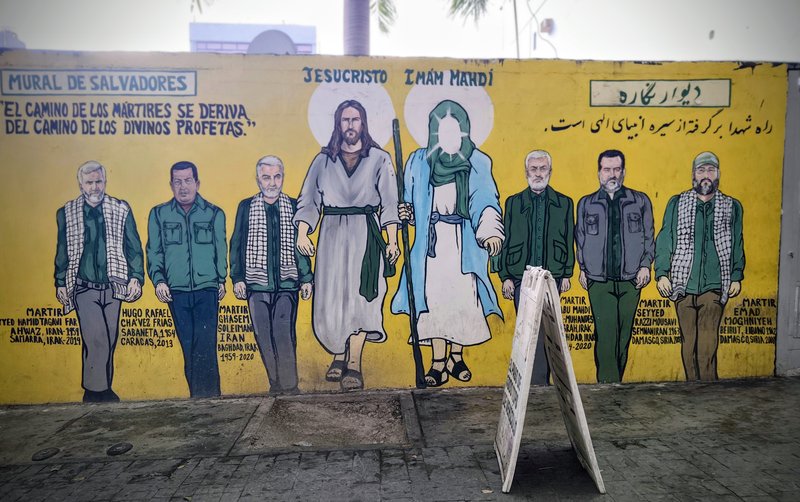
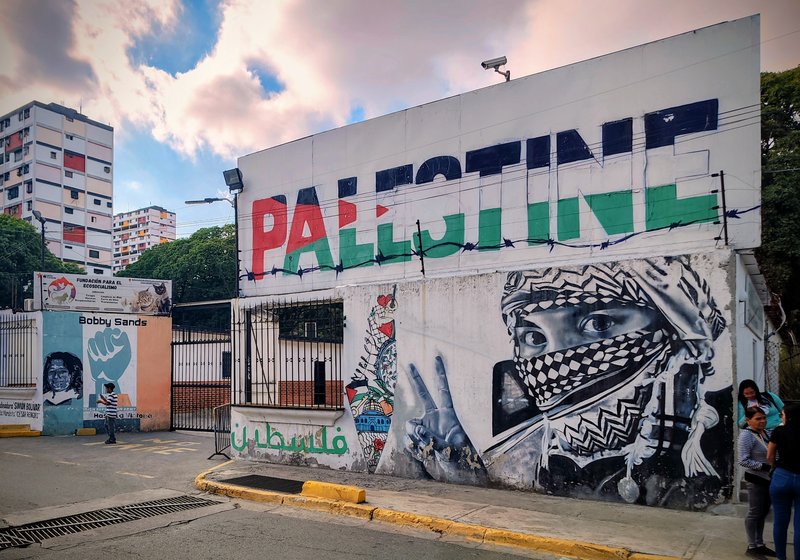
Still, it’s undeniably fascinating to wander through these streets and take in this mix of messages expressed through street art. You’ll pass huge pro‑Palestine slogans, a bronze bust of Che Guevara, and even a wall honoring Iranian officers like Qasem Soleimani. In essence, anything that stands against the United States finds a place here — regardless of how genuinely left‑wing those groups might be.
Remembering Hugo Chávez – Murals and Shrines
23 de Enero was Hugo Chávez’s power base — the place where he first built his political career. Many residents once benefited from his promises of change, though they later felt the weight of Venezuela’s economic crises. Still, admiration for him runs deep here, clearly visible in the many murals that keep his image alive on the neighborhood’s walls.
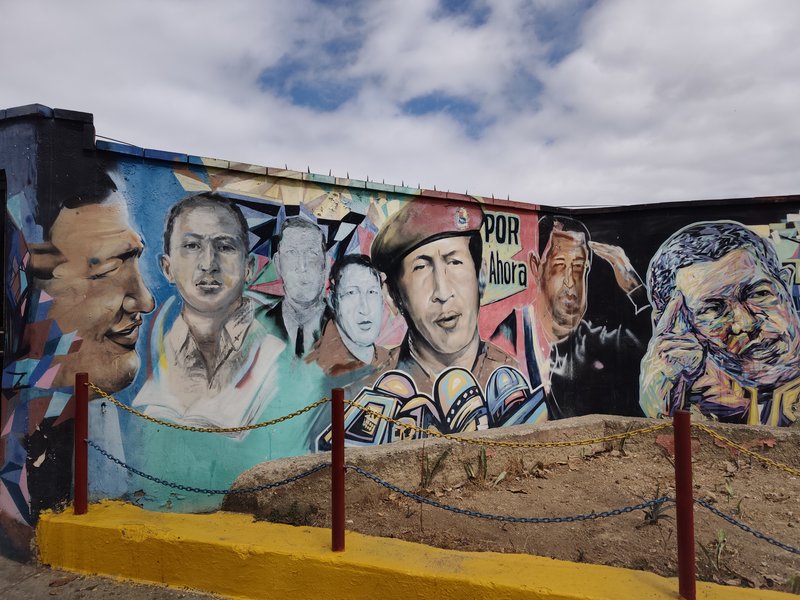
In front of his mausoleum at the Cuartel 4F, a long, mural‑like narrative unfolds — a visual chronicle of Chávez’s life. It begins with his legendary televised speech after the failed 1992 coup, showing him in his red beret, speaking calmly into the microphone. 7 years later, that same man would be elected president.
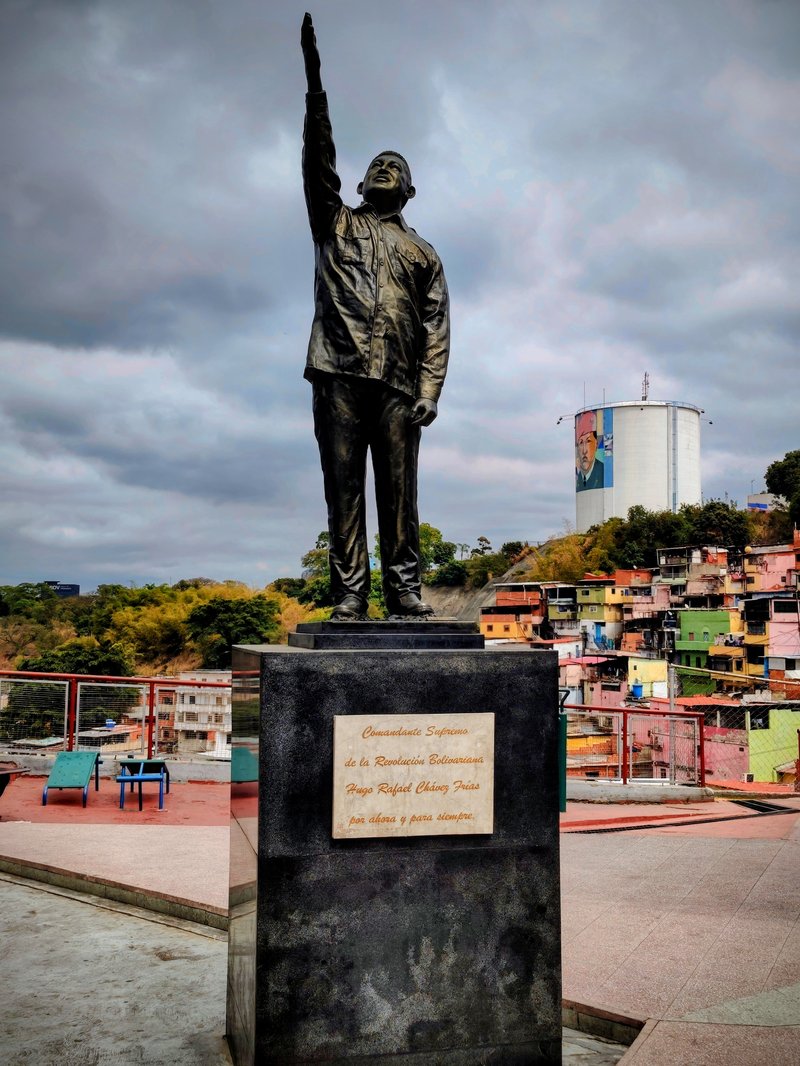
At the nearby Plaza 4F stands another striking monument — a towering obelisk of rust‑coloured iron reaching far into the sky. Next to it, a statue shows Hugo Chávez pointing heavenward, while the water tower overlooking the adjacent barrio bears a giant mural of his face. Just a few steps away, a small shrine elevates Chávez to near‑religious status; here, he’s even referred to as Santo — a saint.
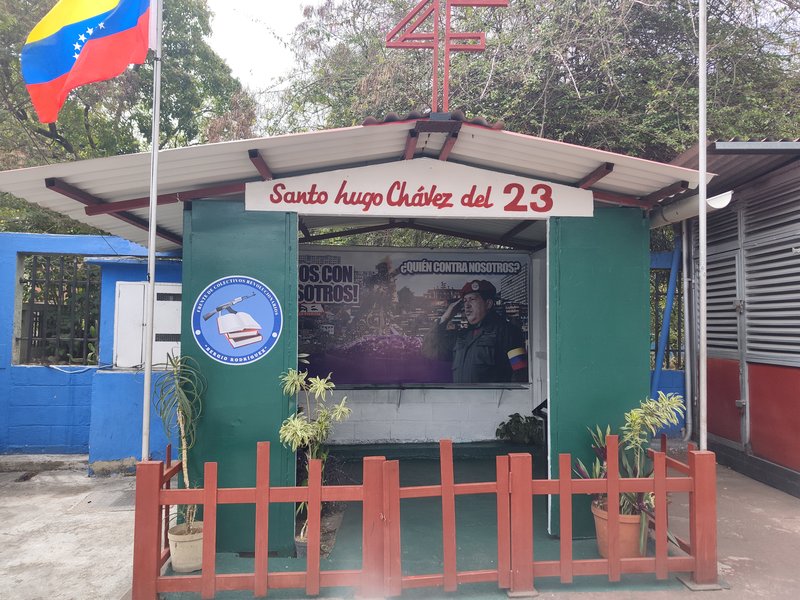
4F – Hugo Chávez Mausoleum
The mausoleum of Hugo Chávez is visible from afar, housed in a striking red‑and‑white complex perched on a hillside — a building that once served as the military museum. It was here, on February 4, 1992, that his coup attempt began, and it later became his final resting place. The date itself is known simply as 4F, which is how the site got its name.
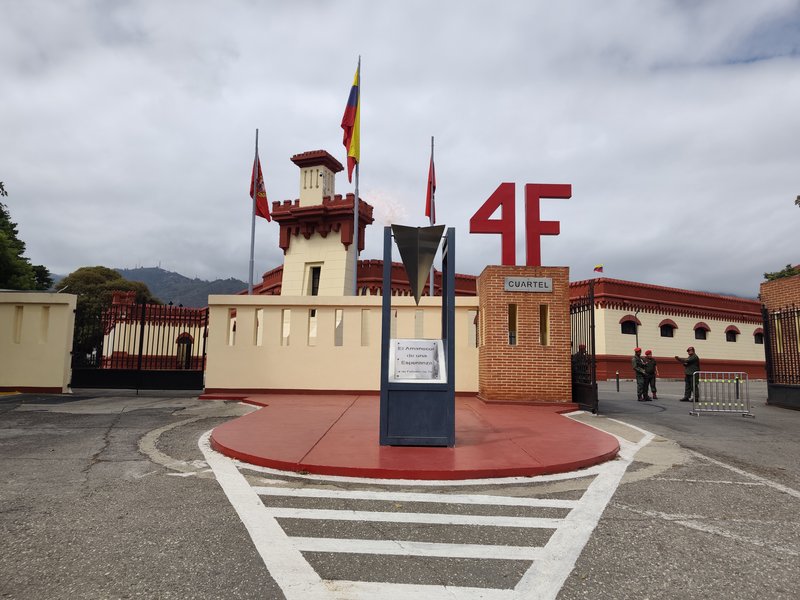
Once inside, you can immediately find a photo series with explanations of Chávez’s life on the right. The standard — yet free — tour guides provide additional details and lead visitors all the way to the tomb itself, where guests are invited to walk around it in solemn reverence. Officially, photography inside is not allowed.
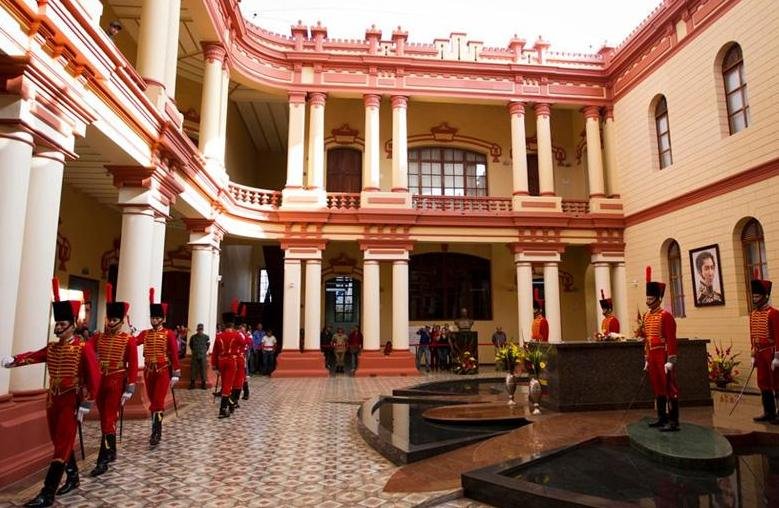
No advance registration is needed to visit. You can simply drop in from Tuesday to Sunday between 9:00 a.m. and 4:00 p.m., pass a quick bag check, and enter for free — although you must be accompanied by a guide. After about 10 to 20 minutes, you’ve essentially seen everything, and you’re allowed to snap one quick photo of the entrance area.
What I didn’t see were any visible traces of attacks. Reports say that on January 3, 2026, several rockets also hit the mausoleum complex and the adjacent military base. But three months after the U.S. intervention, there was nothing noticeable left of that.
Opening Hours: Tue.-Sun. 09:00-16:00 Uhr
Admission: free
Website: https://hugochavez.ve/cuartel-4f-ofrece-visitas-guiadas/
Bars at Bloque 40
If you’d like to mingle with residents of 23 de Enero, the terrace in front of Bloque 40 is a great spot. After my second round through the neighborhood, I headed straight here in the evening. A string of small suburban‑style or neighborhood bars line the area. For about $1 per small beer, you can sit right up against the railing and enjoy the view over the apartment blocks of 23 de Enero.
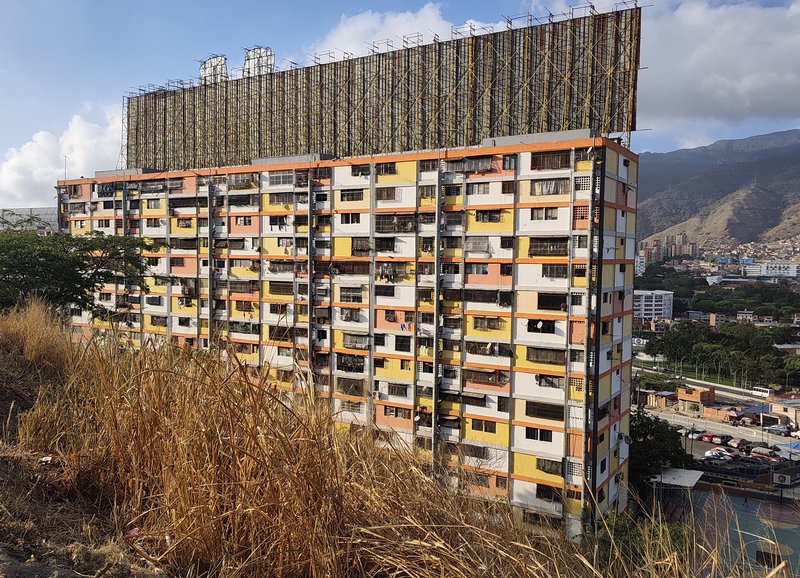
The later it gets, the busier it becomes. First come couples, sharing a bottle of whiskey or rum while kissing. Then groups arrive, arguing animatedly, before eventually breaking into dance to loud music. In theory, this is the perfect setting to strike up conversations quickly.
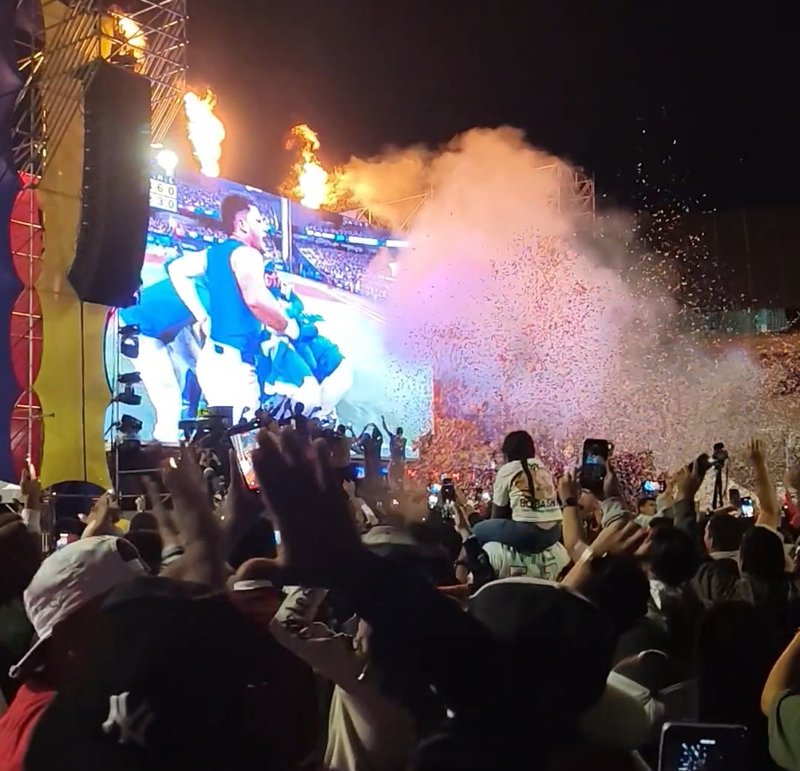
But my plan was thrown off by a baseball game. Being in Caracas just 3 months after the U.S. intervention for the world championship final between Venezuela and the United States was, of course, more than crazy timing. The match flickered on every screen. When Venezuela went on to win, it unleashed a massive wave of celebration. That meant there was less chance to chat and more reason simply to celebrate.
Support For Nicolás Maduro And Cilia Flores
Compared to Chávez, Maduro’s presence in 23 de Enero is slightly smaller — but far from invisible. As in almost the entire city, messages like “Bring Them Back” and “Free Maduro & Cilia” could be seen at least through the spring of 2026. Stencils bearing his portrait are also meant to glorify the former president.
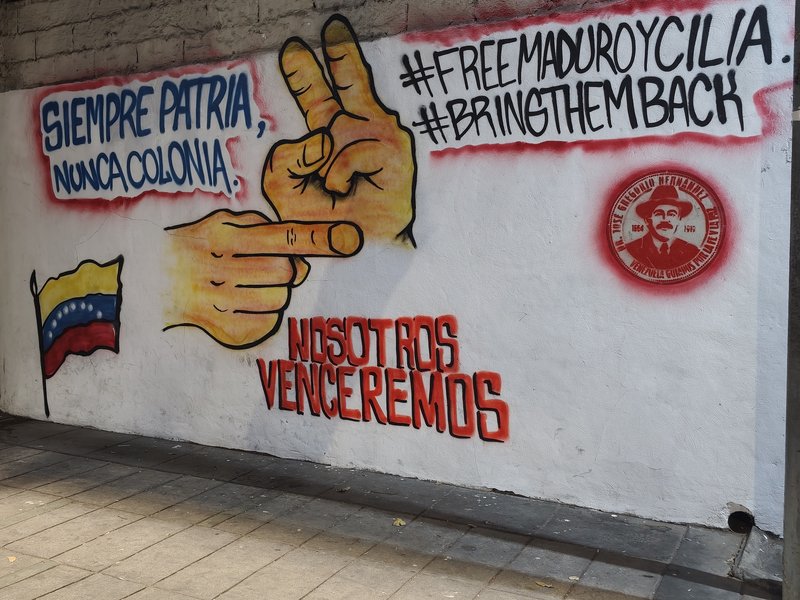
During my visit, these political messages served as an imposing testament to the times. But I also began to see the first graffiti bearing the name of Delcy Rodríguez, the new ruler installed by the mercy of the United States. In a year, whoever visits Caracas might not find a single trace of Maduro left. After all, it’s questionable whether anyone really wants him back.
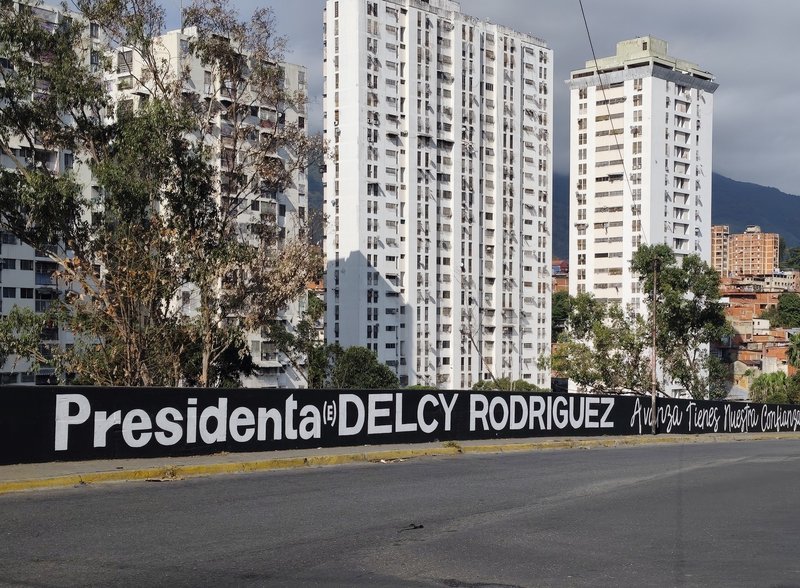
Most of the people I spoke with assumed Maduro was a traitor and said that even those in power have no interest in his return — nor does the population itself. In the end, the kidnapped Maduro will either become a powerful narrative and icon for the next elite, or simply be forgotten.
How Safe Is It To Visit 23 de Enero
In March 2026, 23 de Enero was largely safe. Crime, as in other parts of the country, was barely noticeable. Political violence was similarly absent for the time being. Since January 3, tensions had calmed considerably. The colectivos had already paraded through the streets, leaving their messages everywhere. Beyond that, the area was mostly quiet.
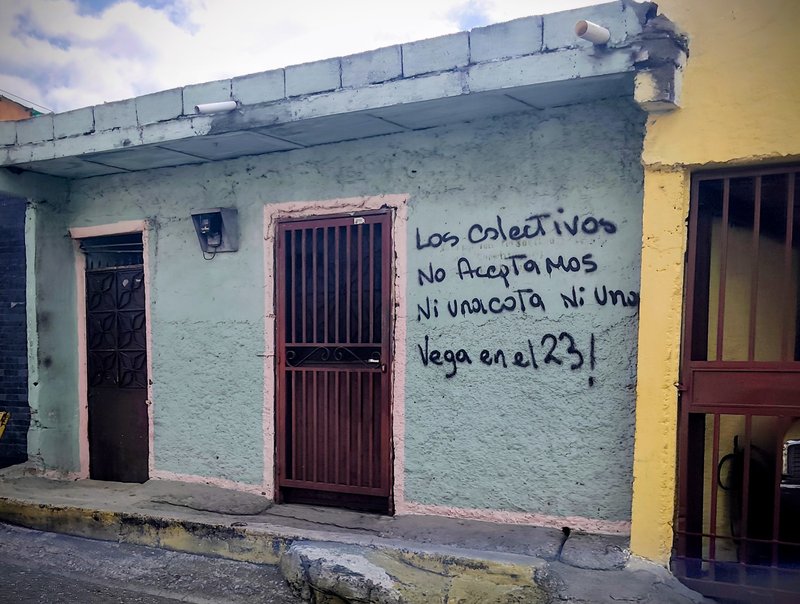
Still, I didn’t venture fully into the colectivo neighborhoods, out of caution — although I think a direct inquiry at the gates probably would have worked. The key is to emphasize your own left‑wing views and express genuine interest in how the socialist communes are organized. I’d definitely encourage trying it. With the Zapatistas in Mexico, for example, it’s no problem at all.
Who Are The Colectivos, and Can They Be Dangerous to Visitors?
The colectivos now have a fairly long history. These groups emerged as socialist collectives around the 1960s and became the grassroots power base of Chavismo in Venezuela during the 1990s.
Officially, they’re supposed to keep the communes of 23 de Enero clean and prevent crime. On the other hand, they’re also accused of being active in drug trafficking and theft. Perhaps more relevantly: they’ve brought political violence onto the streets. During the large anti‑state demonstrations of the Maduro era, they played a key role in crushing protesters — sometimes killing them — with full impunity.
Estimates suggest there are more than 45 colectivos just in the 23 de Enero barrio. Best known, alongside La Piedrita, are Tupamaros, Tres Raíces, Frente 5 de Marzo, Montaraz – Salvador Allende, and Alexis Vive. The list is truly endless. For foreign visitors, the colectivos in 23 de Enero don’t currently appear to pose a direct danger — but that can change quickly depending on the political situation. Tourists should therefore keep an eye on the news and talk to locals about it.
How to Get to Barrio 23 de Enero in Caracas?
The easiest way to reach the 23 de Enero barrio is by motorcycle taxi or regular taxi, as this lets you head straight to Plaza 4F — in my view, the best starting point for a walking tour. From here, Chávez’s mausoleum is just a short walk away, and from there you can continue on into the other neighborhoods.
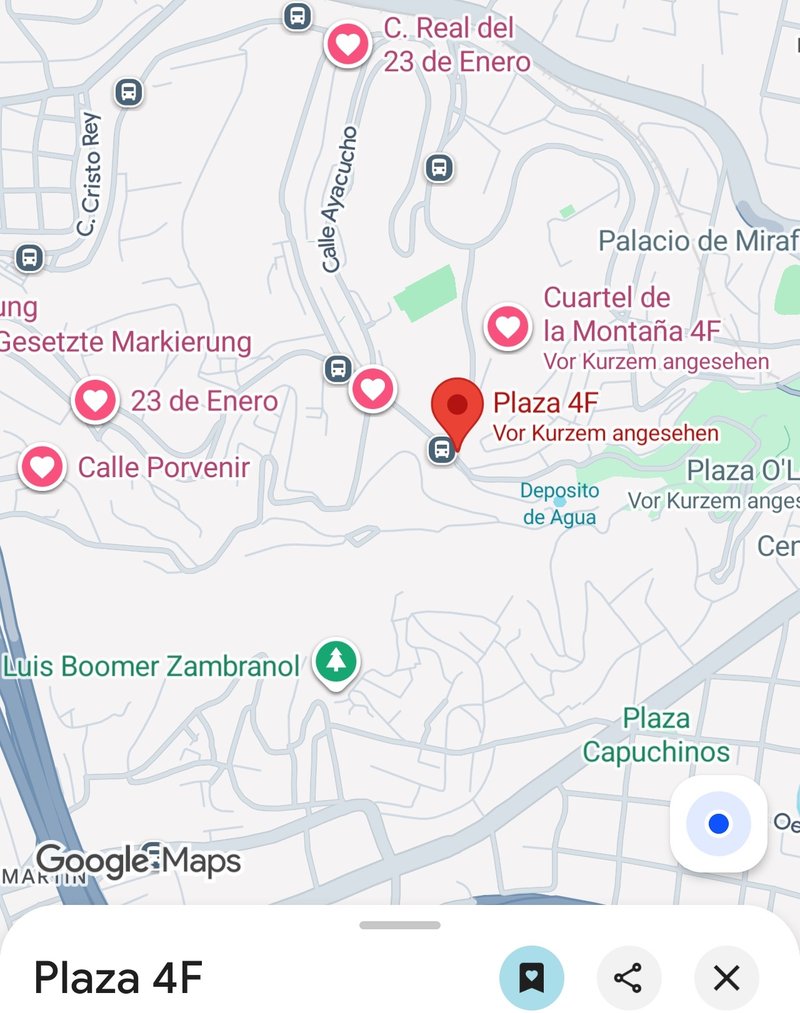
Alternatively, there’s a nearby subway station, Caño Amarillo. From there, however, it’s quite a climb up the hill — a steady 15‑minute walk covering about 900 meters. Considering that a motorcycle taxi costs barely more than $2, it’s hardly worth the extra effort. The subway itself costs only a few cents, paid with a reloadable card. So if you’re traveling on a tight budget, this might be the better option.