How to Enter Venezuela After Maduro: Entry Via Paraguachón (2026)
Published on April 12, 2026
Many people think that entering Venezuela has become more difficult after the kidnapping of President Maduro on January 3, 2026. For U.S. citizens, that may (still) be true, although some changes are currently emerging. For most European passport holders, however, entry is generally visa-free for up to 90 days. To enter the country, you should be well prepared. I tried it myself in mid-March 2026 and, with the necessary documents printed out, was able to enter the country easily. The real problems arose later.
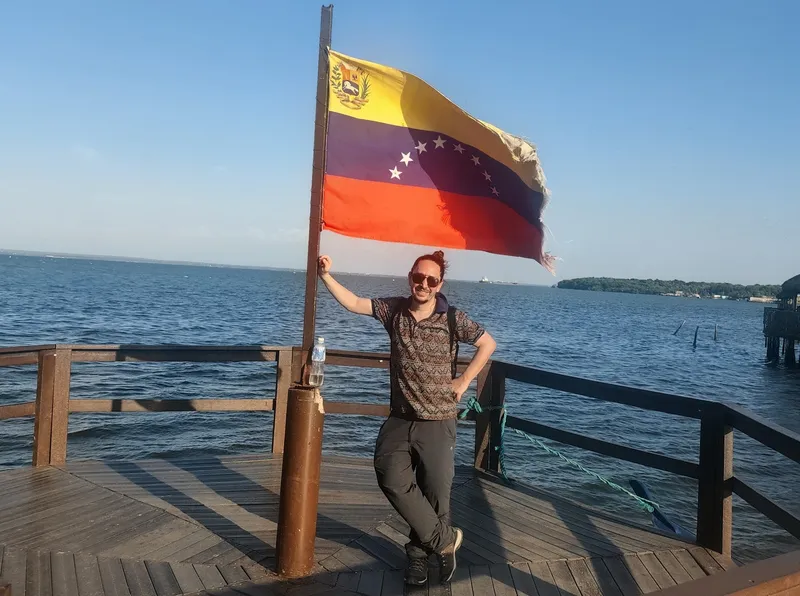
Which Border Should I Choose to Enter Venezuela?
The easiest way to enter Venezuela in 2026 is flying into Caracas Airport. Based on recent experiences, those arriving by air are not checked too thoroughly and can enter the country quickly. However, since I was already in northern Colombia, I decided to take the land border between Paraguachón and Guarero. Another popular option is Cúcuta in Colombia, where there are several border crossings. You can reach this town easily from Bogotá.
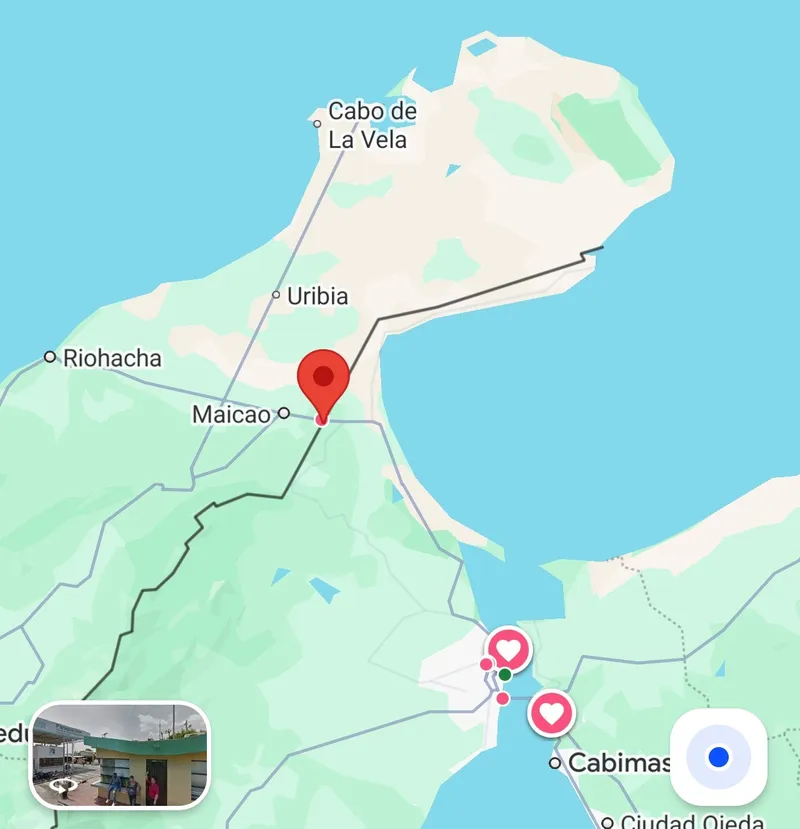
Paraguachón, just to clarify, is also known as La Raya. So if taxis or buses offer a ride to La Raya, they are always referring to the border crossing. It is about 13 km away, or a 20-minute drive, from Maicao, the nearest larger city in Colombia.
Entering Venezuela Through Paraguachón and La Raya
Many travelers will be coming from Cartagena and may stop along the way in places like Santa Marta, Palomino, or Riohacha. The journey is quite time-consuming. From Palomino, it took me until the evening to reach Maicao, already knowing that Venezuela is one hour ahead. The border is said to close at 6:00 PM Venezuelan time. The taxi driver in Maicao, however, assured me that it was still possible to cross later. Two other passengers traveling with me in the same car agreed.
Actually, my plan was to hitchhike the entire way to Maracaibo. However, given how late it was getting, I switched to buses and taxis instead. Otherwise, there is always the option of staying overnight in Maicao and crossing the border into Venezuela the next morning.
What Is Needed to Enter Venezuela?
After doing some research and making contacts in Venezuela, I booked a series of hotel stays. These are very helpful for entering Venezuela, but also for checkpoints within the country itself. A reservation for at least four days should be available in printed form. As a precaution, I brought printed reservations for all my days in Venezuela, as well as my flight tickets from Caracas to Medellín and from Bogotá to Istanbul/Berlin.
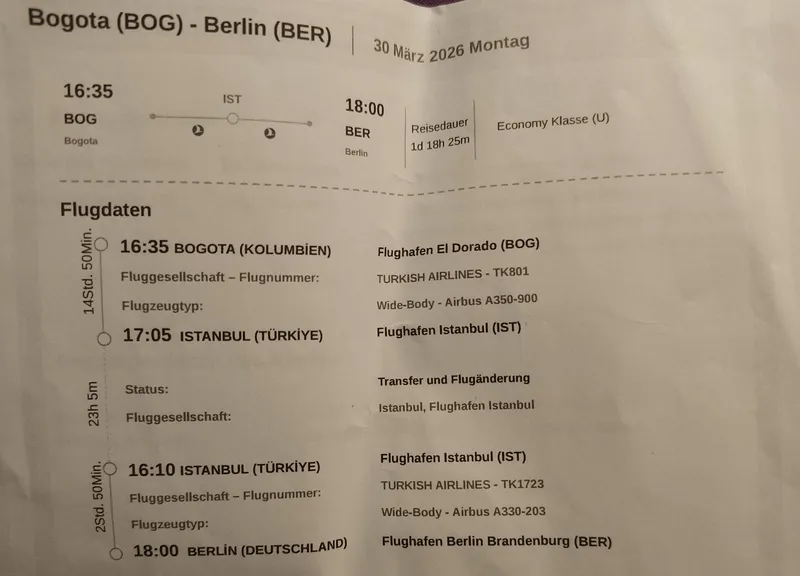
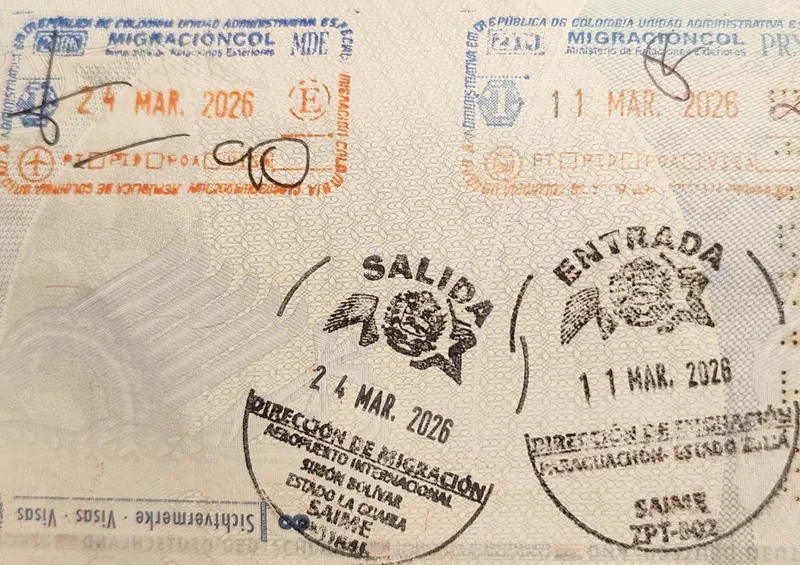
These documents actually made a strong impression. At the immigration window, I was asked to come inside, where I met El Jefe, the head of the border post. I immediately showed him one document after another, and he agreed quite quickly to let me pass. He told the others that I had a fully organized plan and my passport was stamped soon after.
Another hitchhiker I met later in Maracaibo encountered more trouble. Although she presented her reservation, the officials wanted to see proof of payment. In the end, they forced her to transfer the money to the hotel. However, she managed to get through with a trick (transferring the amount from one of her credit cards to another).
These are the 4 documents and pieces of information you should have ready when entering Venezuela:
- In any case: A printed reservation for the first nights (at least 4 days)
- Ideally, printed hotel reservations for all remaining days (more convincing)
- A printed flight ticket for your return to your home country (surely a plus, but not always required)
- Ideally, a printed flight ticket for leaving Venezuela (not strictly required, but beneficial)
Stamped in and thus officially entered, I still had to go to an interview with SEBIN, the intelligence service of Venezuela. In a separate office, all imaginable personal data was collected and sent into a WhatsApp chat. I had to provide information about my place of residence, email, social media (Facebook, Instagram), my job, marital status (married/single), and my reason for travel (tourism/turismo). In the end, the details of my first hotel were also recorded, along with a photo of the reservation.
My Spanish is actually decent, even if far from perfect. However, coming across as a bit less fluent than usual seemed to help. At the very least, it diverted any possible suspicion away from what the intelligence service definitely does not want here: investigative journalists.
At the end of the intelligence interview, a video of me was recorded. In it, I had to explain in Spanish what I planned to do in the country, who I am, where I live, how old I am, and what my profession is. This recording was then also sent to a WhatsApp chat.
The entire interview lasted maybe half an hour, but it wasn’t necessarily as thorough as many other travelers had described in the weeks following the kidnapping of Nicolás Maduro on January 3, 2026. Overall, I had the impression that the officer also struggled a bit with typing and was simply somewhat slow.
Good to Know at the Paraguachón Border
The taxi from Maicao dropped me off directly at the Venezuelan border checkpoint. Since the flags look similar, I assumed I would be getting my exit stamp from Colombia here. The Venezuelan officials looked quite confused and immediately turned me away. It wasn’t until a while later that I noticed the stars on the flag and realized I was not at the Colombian checkpoint. So I had to walk back about 100 meters and complete my exit there.
How to Continue after Entering Venezuela in La Raya
One particular taxi driver was surrounding me the whole time at the border crossing, to a point that it became really annoying. In La Raya, he followed me all the way to the Venezuelan side and almost got me into trouble, because he kept talking about a different destination than the one listed on my hotel reservation. Saying “No quiero ninguna ayuda” (“I don’t want any help”) eventually helped me to get rid of him. Or so I thought.
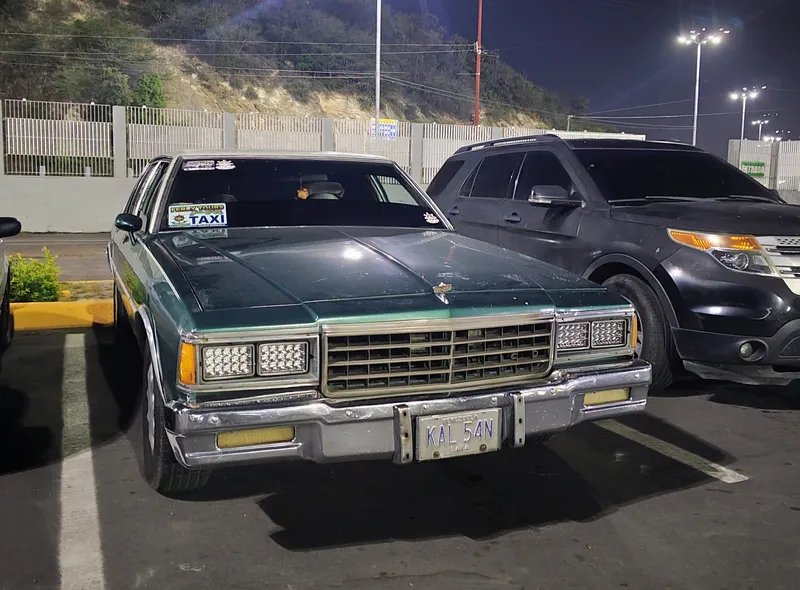
When I left the interrogation, the taxi driver from before was still standing there, at least this time with a fully packed oldtimer car. Since it was getting dark, I took the offer. He wanted to have 20 USD for the ride from La Raya to Maracaibo, which, as local people confirmed me, is a fair price. If you want, you can try to get it down to 15 USD, but 20 USD is standard here.
From La Raya and Guarero to Maracaibo
By car, you will need about 2 to 3 hours from La Raya to Maracaibo takes. The actual timing can vary greatly, since you pass through checkpoints almost every half an hour and sometimes have to show your documents. Having your passport ready is advisable.
I myself was hardly checked by the police or military. They just had a quick look at my passport and everything was fine. I had the impression that foreigners with an entry stamp are generally considered sufficiently vetted and are therefore waved through easily.
Later, however, things turned out differently. The other hitchhiker, who I met in Maracaibo, was subjected to a full luggage inspection, which took about half an hour. The same fate befell me later while hitchhiking in Venezuela, on the route from Maracaibo to Caracas, at the Jacinto Lara toll station. In addition to the luggage search, they read my personal postcards, wanted access to my phone, threatened me with arrest, and pushed for bribes.
Leaving Venezuela: it's also complicated
When you passed the entry into Venezuela after Maduro and survived all the checkpoints in the country, you're still not out of the woods. Further questioning awaits at departure. It started at check-in. There, I first had to wait for a very long time and was already subjected to checks before I even reached the counter. That's when I understood, why the airline recommended arriving 5 hours before departure. At check-in, they already started probing, initially about entry and exit details, and especially about the onward flight to Europe. The information was then reviewed and discussed at length.
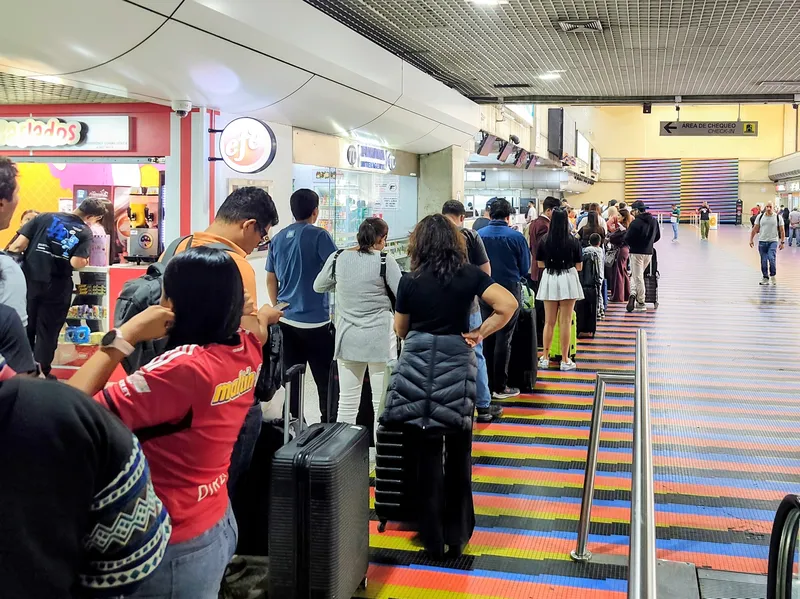
The woman at the passport control also wanted to be informed about my return to Europe. Here, it was again helpful to have my latest hotel bookings and the confirmation of my return flight from Bogotá to Europe ready. It's unclear what they would have said, if I couldn't prove my exit from South America. I even had to show that the flight from Istanbul would continue to Berlin and therefore to my home country.
I had already heard from other travelers that such checks on return flights to home countries were conducted. They were common when entering Isla Margarita, for examplen, in January and February 2026. Why the Venezuelan authorities care about people's stays in neighboring Colombia puzzled me a bit. In any case, it is advisable to carry at least some kind of documentation. The flight connections should exist in reality and not be made up, since the staff at the check-in counter searched for them online.
Quick Answers (FAQs)
Which Documents do I need to enter Venezuela?
You will need a printed confirmation of your hotel booking for the first 4 days. Talking from my experience, it's better to have reservations for every day as well. Flight tickets also help to convince the border guards. If you're not eligble for visa-free entry (USA, China, India...), you will need to apply for a visa beforehand.
Do the Border Guards in Venezuela Speak English?
In most cases, you will not find any border guard who can speak English. That's why it's important, to acquire some basic Spanish skills and/or download the language for Google Translate onto your phone.
Can I enter Venezuela by land?
Yes, it's no problem to enter Venezuela by land, for example through Paraguachón or Cúcuta. Like with air travel, you should have your documents ready, especially hotel reservations in printed form.