Tashkent's Most Beautiful Metro Stations from the Soviet Era

Published on July 28, 2025
One of the most affordable attractions in Tashkent is the metro of the Uzbek capital. For about 10 cents, you can dive into this magnificent world of the Soviet "Palaces of the People", consisting of impressive halls with columns, murals, chandeliers, and mosaics.
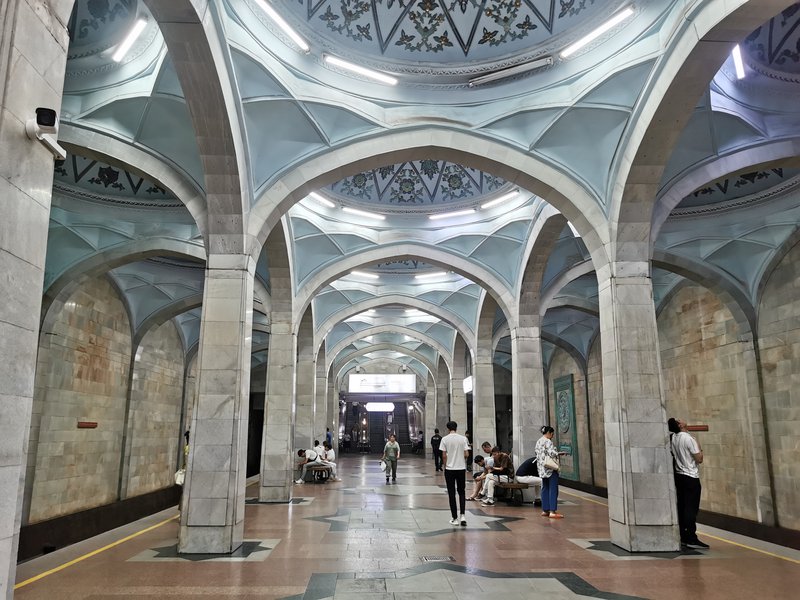
While people praise the beauty of the Moscow Metro, only a few know the Tashkent version of it. Directly compared, I find some of the stations even more appealing than the ones in Russia. One reason is that they were created with an interesting oriental twist mixed with the classic Soviet pathos.
Here are my top 10 metro stations in Tashkent, Uzbekistan:
1. Alisher Navoiy
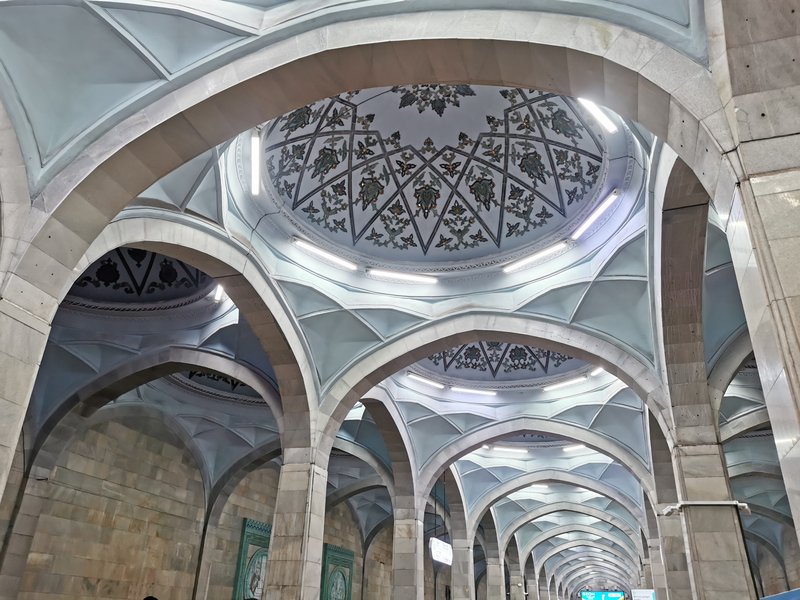
The Alisher Navoiy station on the O’zbekiston line is my absolute favorite. It was opened on 8th December 1984 and bears the name of one of the most renowned poets of the Timoride epoch, who lived between 1441 and 1501. His elaborated poetic work is represented in many of the station's designs.
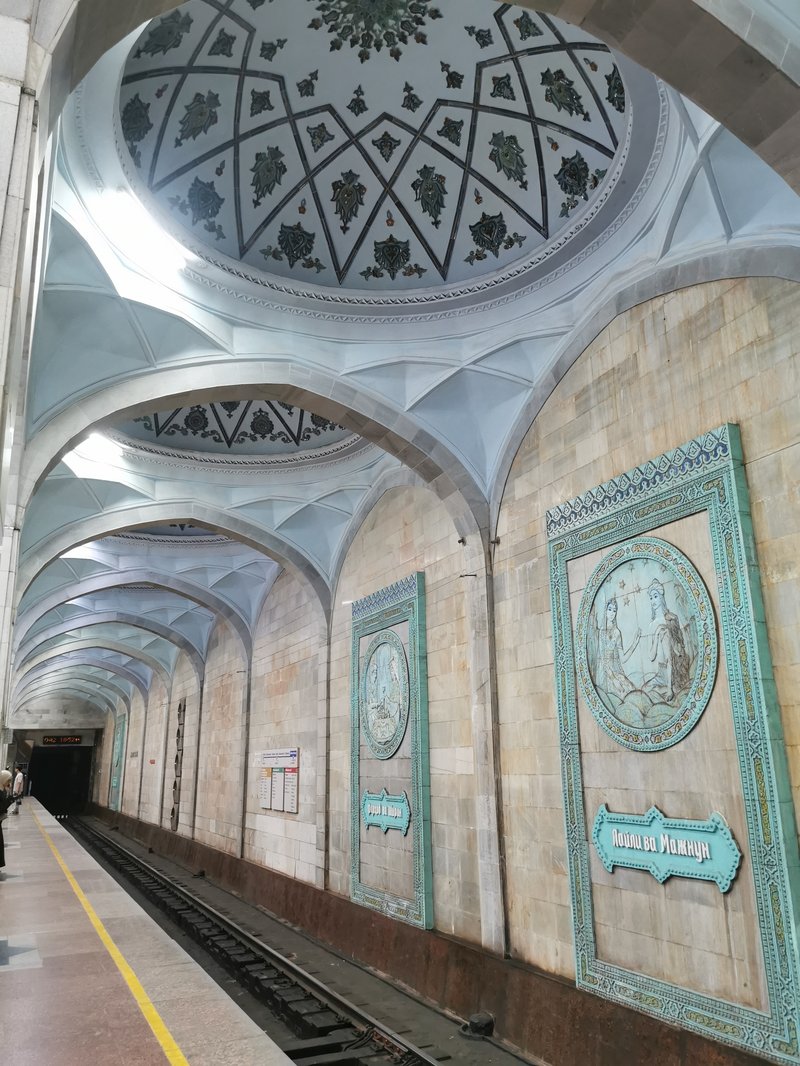
On both sides, you will notice the small alcoves with turquoise-coloured reliefs depicting scenes from the life and work of Alisher Navoiy. It's worth looking at each and every one of these artworks, feeling impressed by the detail of the tiles. What's even more fascinating is the ceiling. It consists of countless domes, turning the subway station into a mosque or an oriental bathhouse. They are all carried by rectangular marble columns that turn into vaults towards the top.
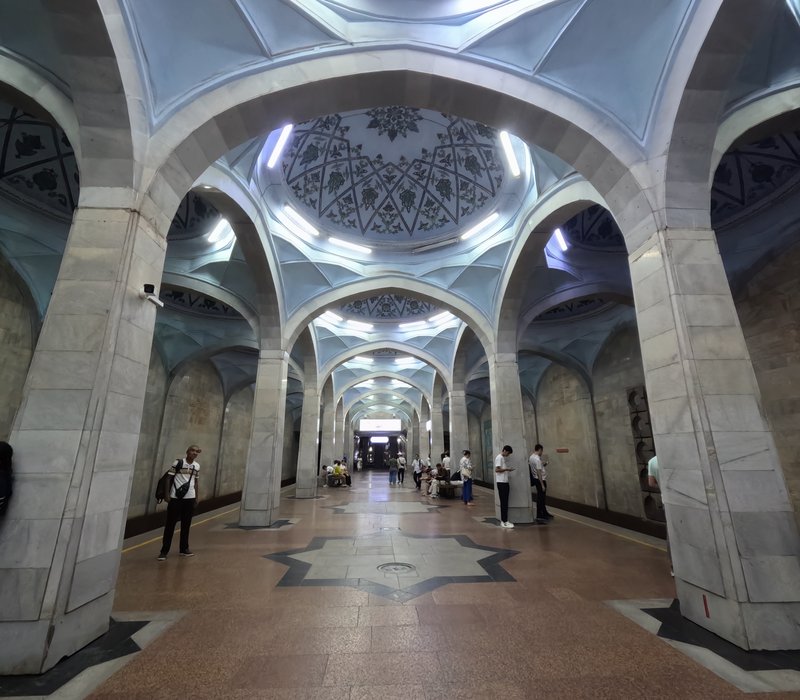
Apart from that, you should also have a look at the lobby and entrance area. The walls are decorated with more reliefs and ornaments, for example, of women playing the Dotur. Going down by the escalator, you will approach a large tiled mural in green, which unfolds from the center into a large star-shaped mandala. Below this mural, you can enter the platforms.
Location: Alisher Navoyi
2. Kosmonavtlar
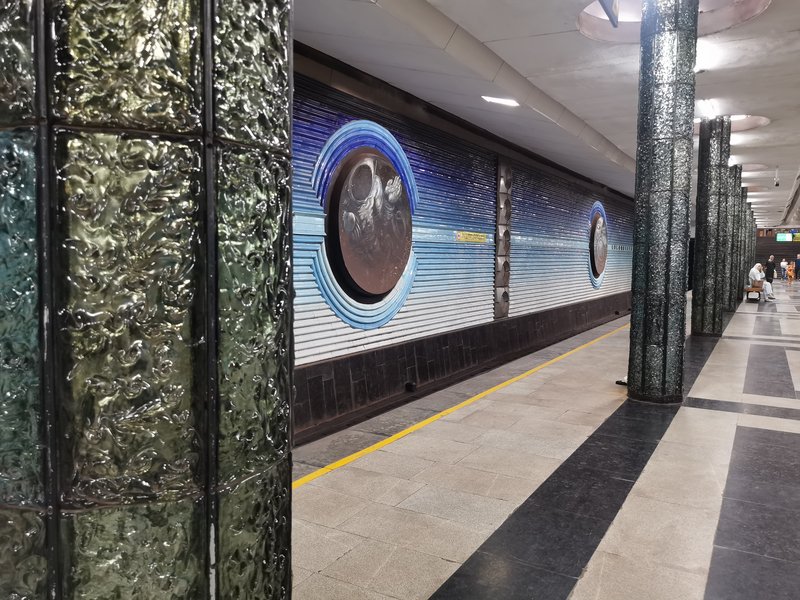
It was really hard not putting this station at the top of the list, since it's probably the only completely space-themed station of the former Soviet Union (and worldwide). The grooved tiled walls have a colour gradient from white at the bottom to light blue in the middle and dark blue and black at the top. This perfectly represents the journey to the cosmos, traveled by the people immortalized in the paintings in the middle.
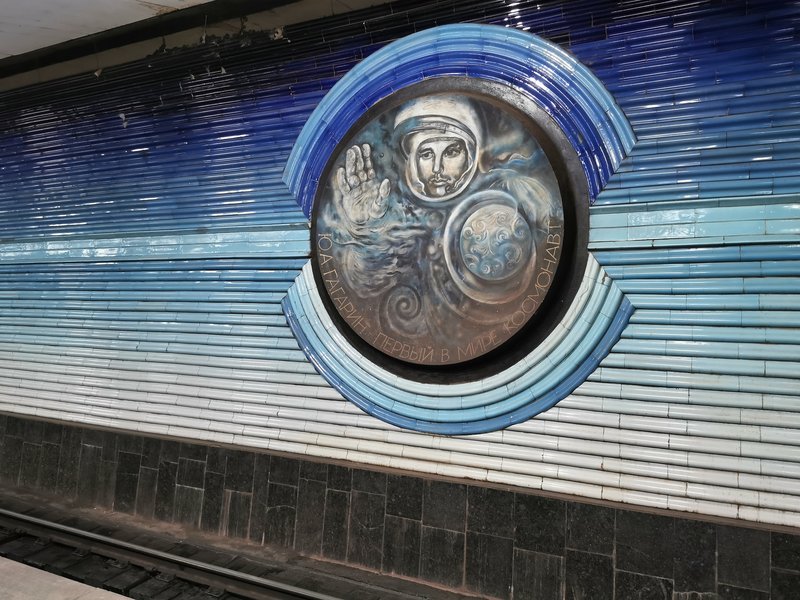
Looking closer, you will find famous cosmonauts like Yuriy Gagarin, the first man in space, and Valentina Tereshkova, the first woman who followed him. Apart from that, you can find other important figures of the Soviet space program on the round sci-fi-like pictures, for example, Vyatcheslav Volkov and Tashkent-born Vladimir Dzhanibekov, Uzbekistan's big pride.
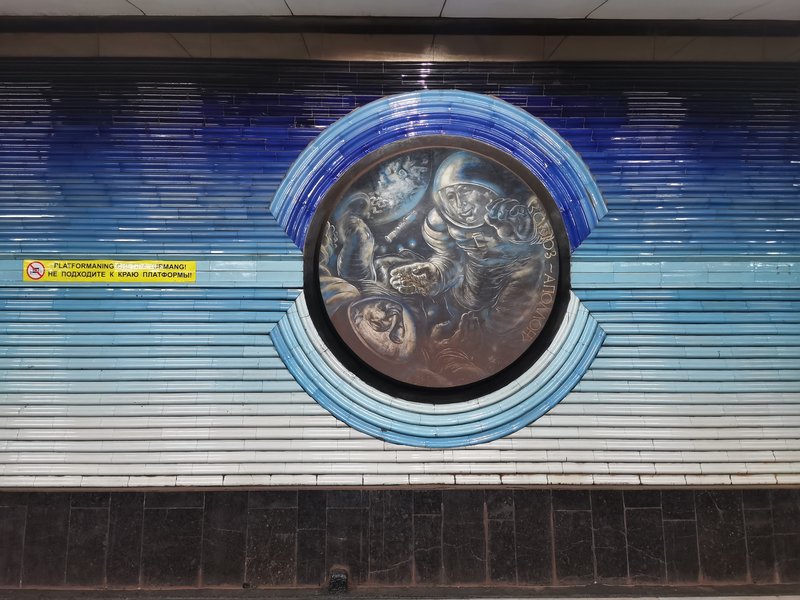
Furthermore, the design also builds a bridge to ancient days and the Islamic Middle Ages. That's why you can spot the Timurid astronomer Ulugh Beg and the Greek mythological figure Icarus on the walls as well. The columns, on the other hand, are covered in tinted glass, which, together with the crystals at the ceiling, represents the Milky Way and the sparkling stars of our universe.
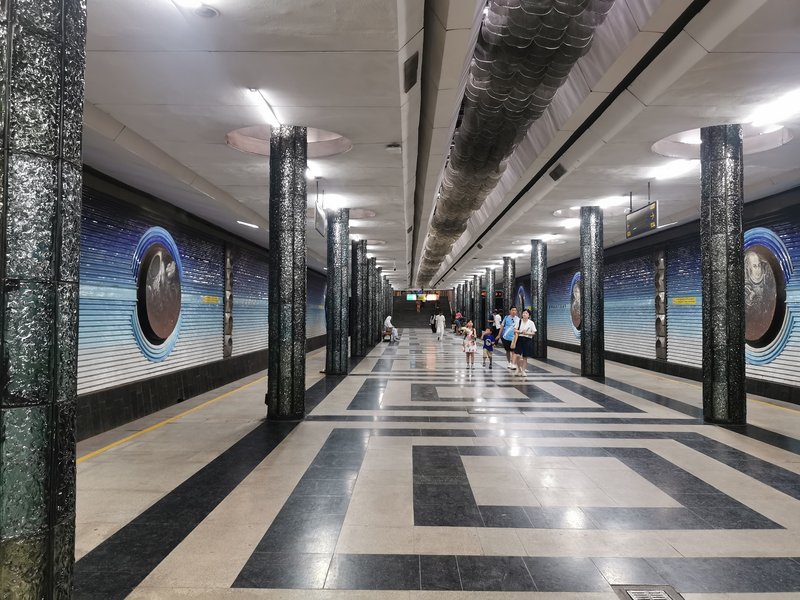
Kosmonavtlar was opened in 1984 based on the idea of the Tashkent architect Sergo Sutjagin.
Location: Kosmonavtlar
3. Mustaqilliq Maidoni
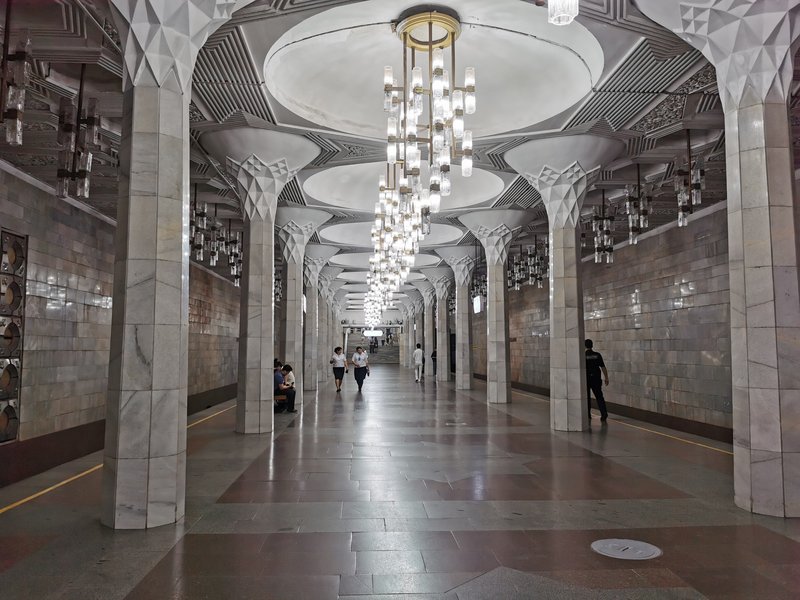
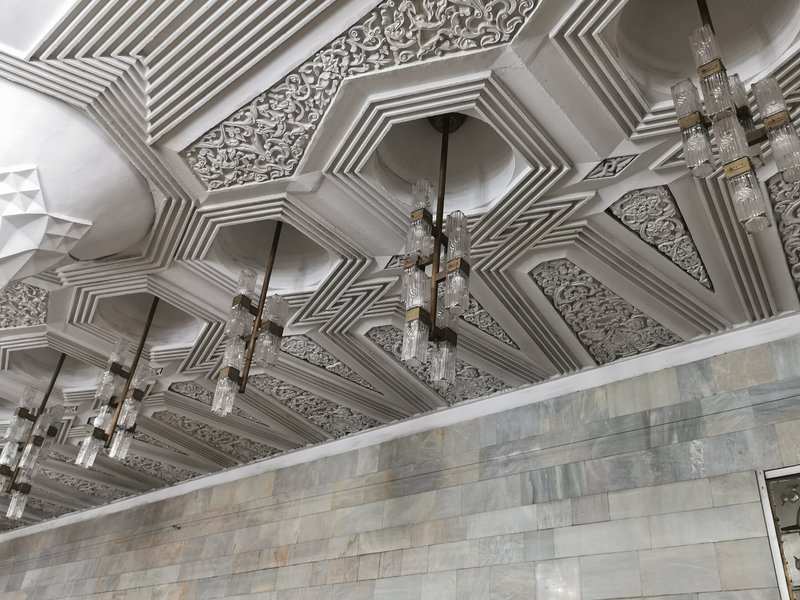
The Mustaqilliq Maidoni station at Mustaqilliq Square is part of the Chilonzor line and was opened in 1977, back then under the name Lenin Square. When you enter the hall, you need to take a big breath and enjoy the beauty of this little palace. The high and round columns made from white marble turn into wide cones at the top, carrying the decorated ceiling.
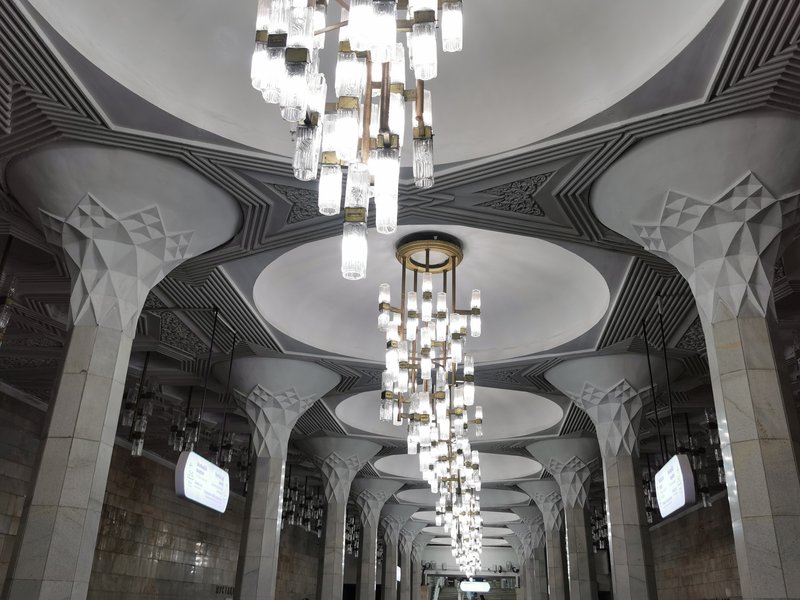
Between the pillars: Chandeliers that hang deep down into the hall, almost reminding one of dripping crystals. The walls and the floor are made of colourful marble, in which shades of copper green and rusty red blend.
Location: Mustaqilliq Maidoni
4. Gafur Gulom
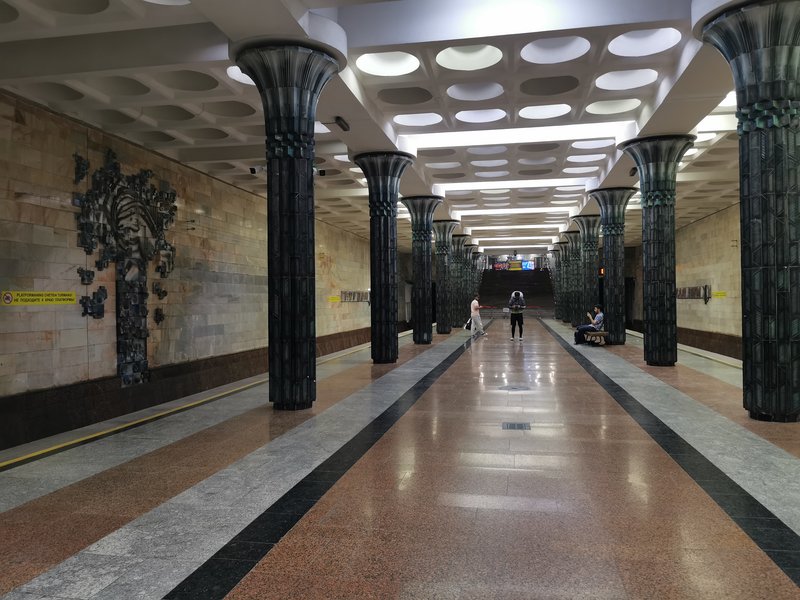
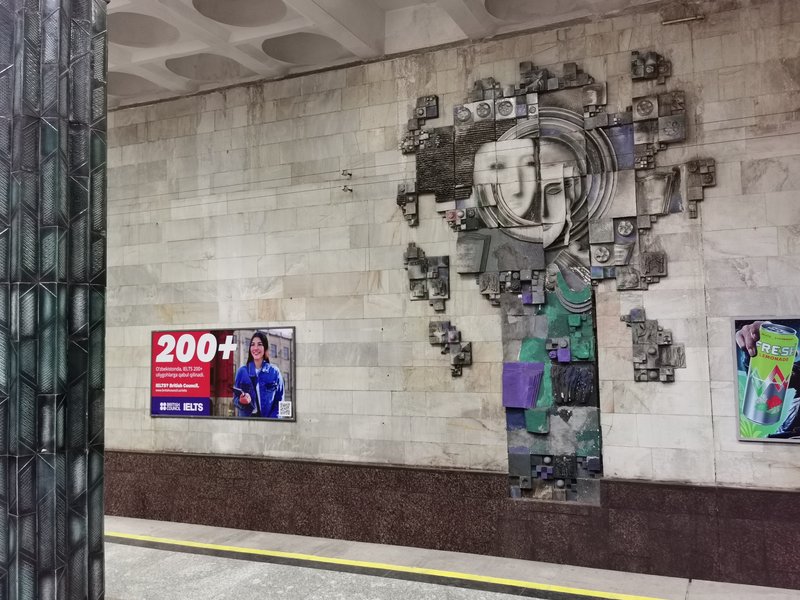
Gafur Gulom on the O’zbekiston line has a comparably simple design, but it can still count as one of the most beautiful Tashkent Metro stations because of its wonderful green columns. These merge into a white ceiling, which is perforated by round lamp inserts. The real highlights are the brutalist-looking reliefs, consisting of glazed squares and rectangles, which together form large-scale images, e.g., of horses, people, and a Soviet star.
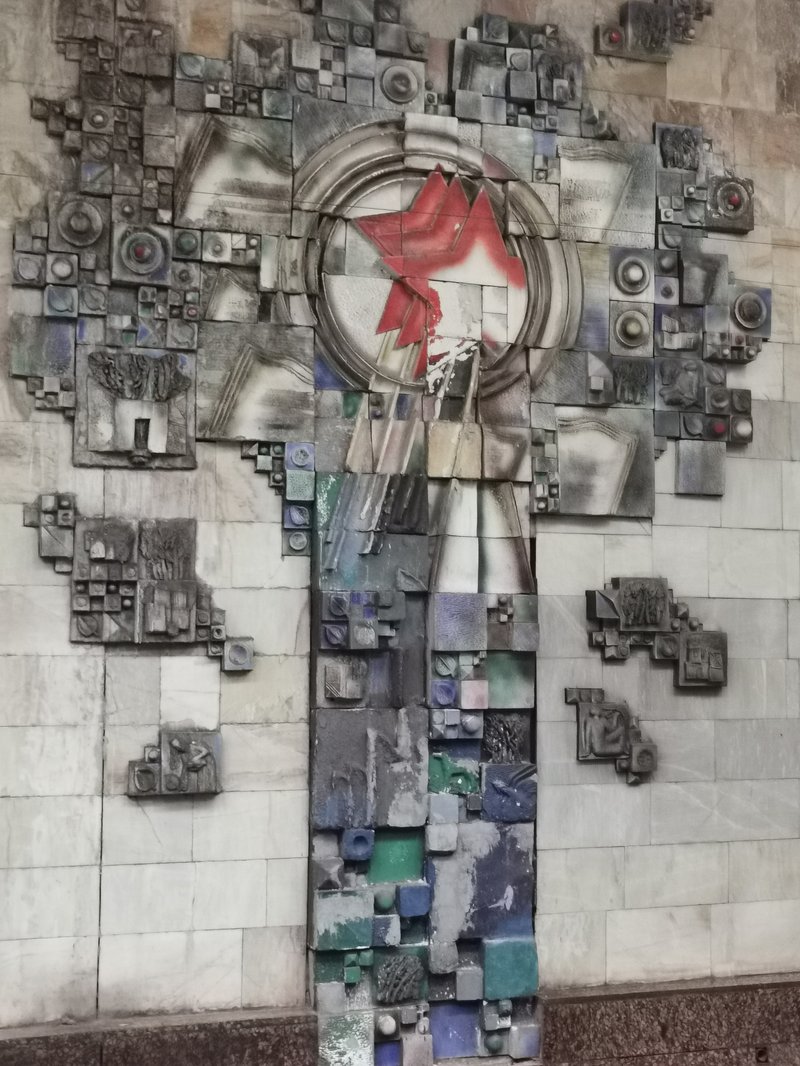
These granite, ceramic, and marble reliefs are a composition created by S. Sultonmuradov, who wanted to honor the station's namesake, the Uzbek poet Gafur Gulom. Under this motto, the station was inaugurated on November 6, 1989, as an extension between Alisher Navoiy and Chorsu.
Location: Gafur Gulom
5. Oybek
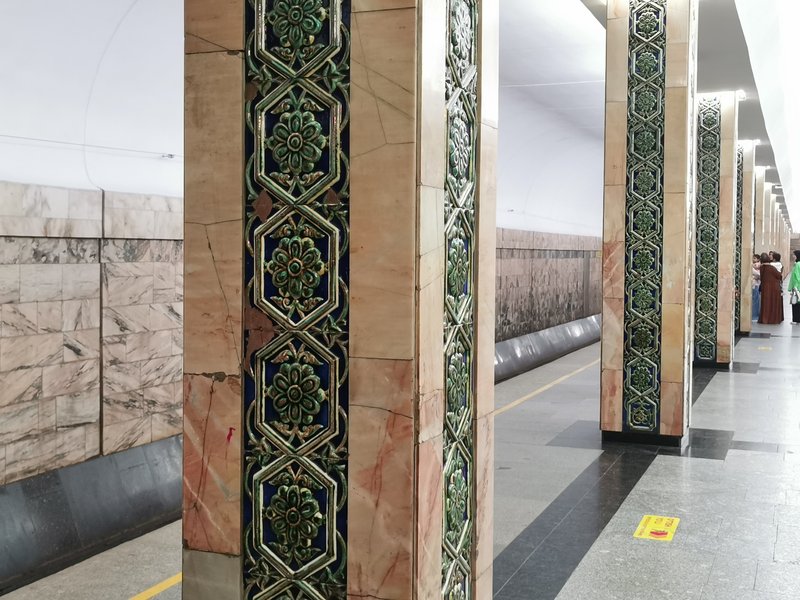
The important Oybek transfer station on the O'zbekiston line also has a somewhat simpler design. From here, passengers can switch directly to Yunus Rajabiy on the Yunusobod line. The stop was opened in December 1984 and named after the contemporary Soviet author Musa Tashmukhamedov, also known as Oybek.
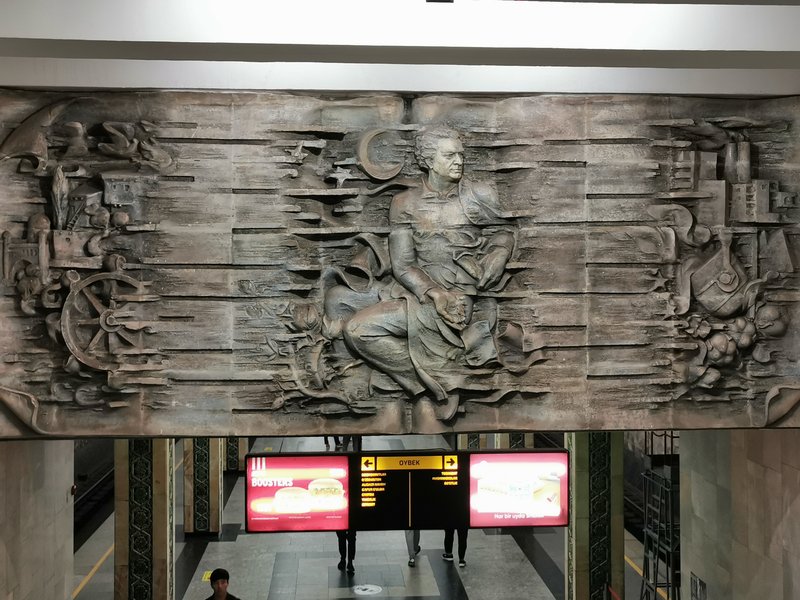
The relief of the writer is shown directly at the entrance to the platform. There you will find square columns with marble corners and turquoise edging. The latter mainly depict flower shapes and oriental ornaments.
Location: Oybek
6. Paxtakor
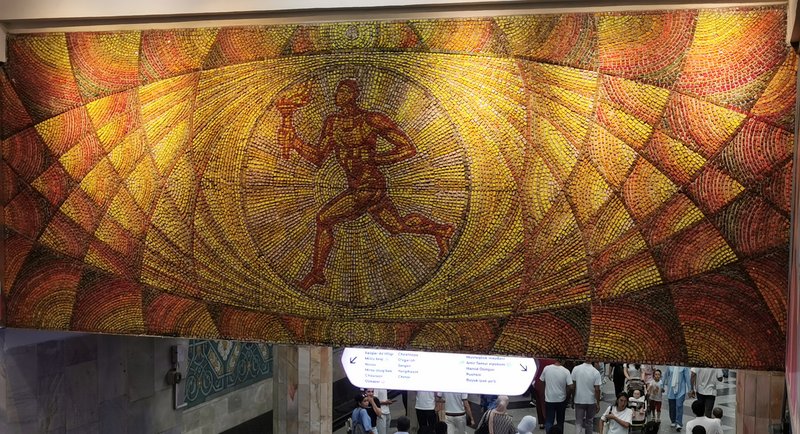
Paxtakor is located right next to the modern Tashkent City Mall and the stadium of the football club of the same name. The station is named after the arena, as indicated by the Olympic-style mosaic at the entrance with torchbearers in red, yellow, and orange. Relatively classic marble columns are lined up on the platform.
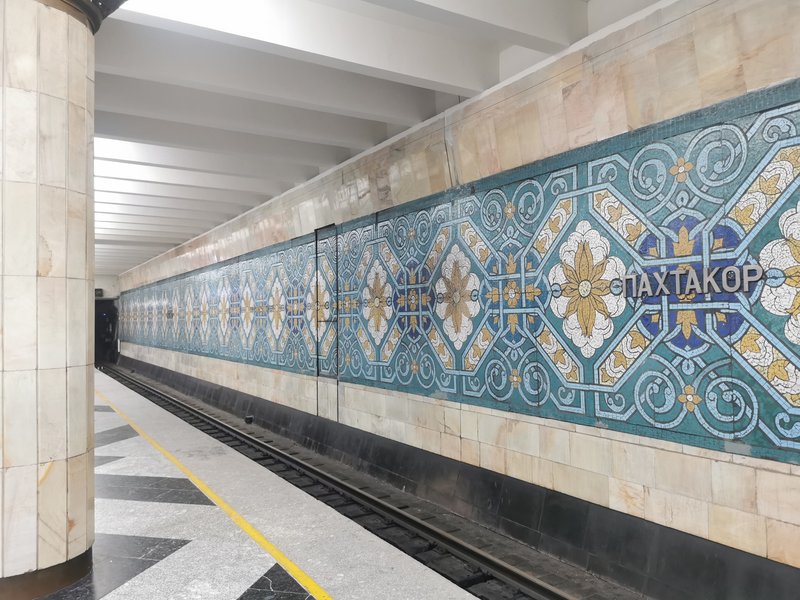
The main focus of the design lies on the beautiful mosaic band in turquoise, white, and blue, which runs along the walls from start to finish. It mainly shows intricate floral patterns. The Paxtakor station in Tashkent was opened back in 1977 and is part of the important Chilonzor line.
Location: Paxtakor
7. Chilonzor
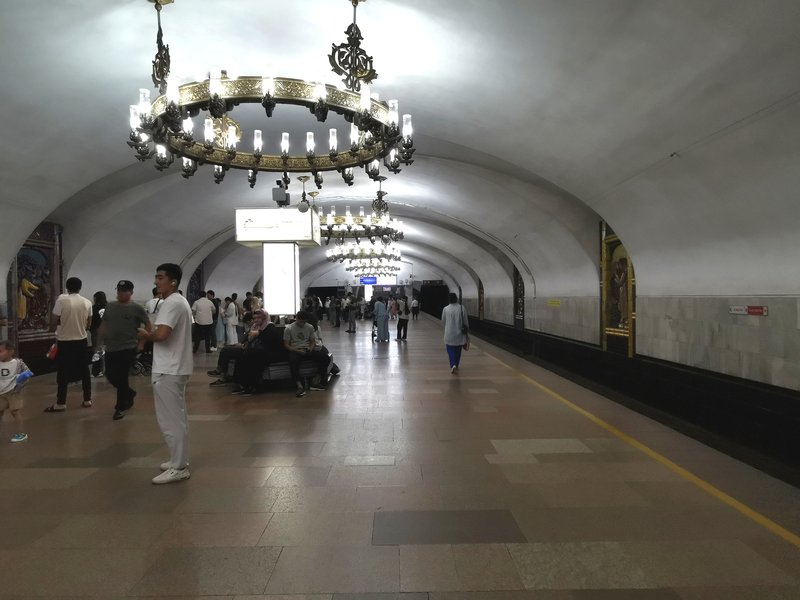
The Chilonzor station is situated on the metro line with the same name and was opened in November 1977. That makes it one of the oldest metro stations in Tashkent. At the same time, it's one of the most unique ones. In contrast to other stops, it has no columns but only a high vault in pure white. On the ceiling, you will spot the large round chandeliers with a diameter of roughly five meters. Those chandeliers would be perfect for a medieval round table.
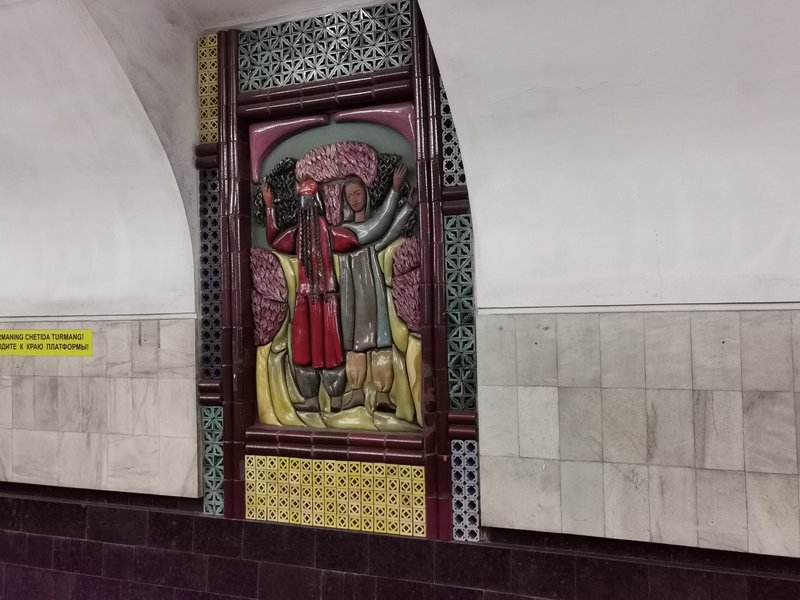
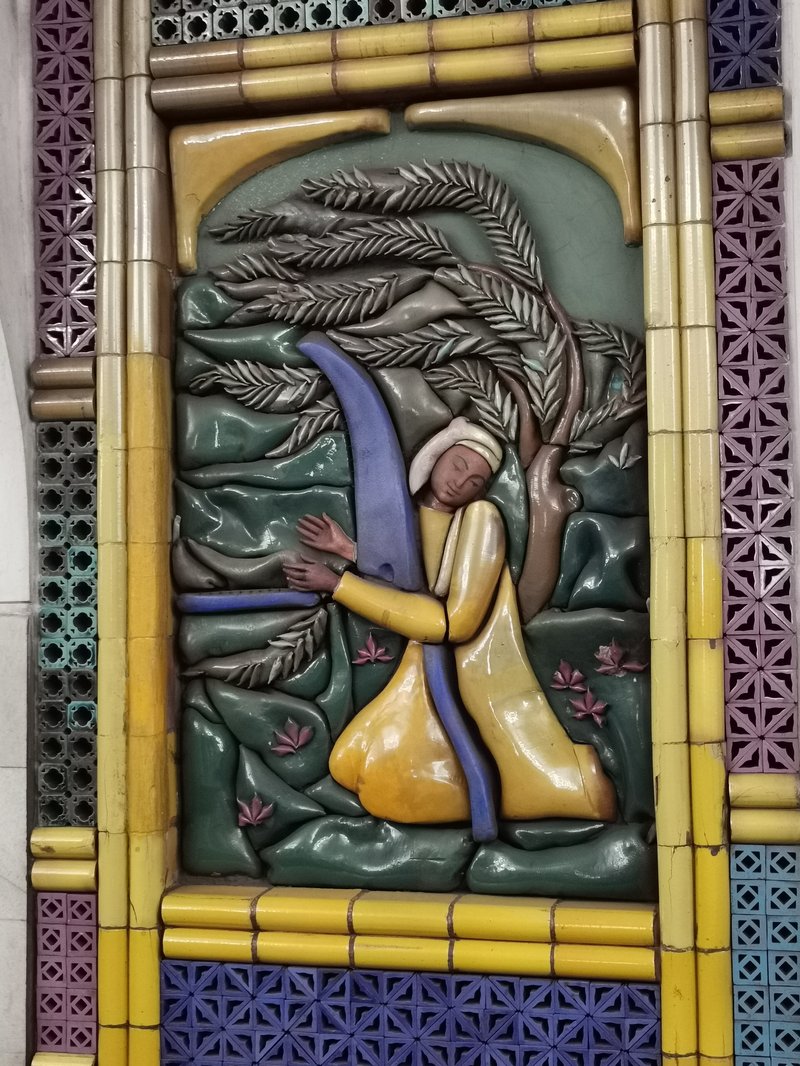
The walls are decorated with glazed ceramic pictures in bright colors. They depict various scenes, from an Uzbek teahouse to musical interludes. These do not relate directly to the name of the station, the microdistrict Chilonzor, in which it is located. However, the artistic portraits and marble walls alone make this metro in Tashkent definitely worth a stop.
Location: Chilonzor
8. O’zbekiston
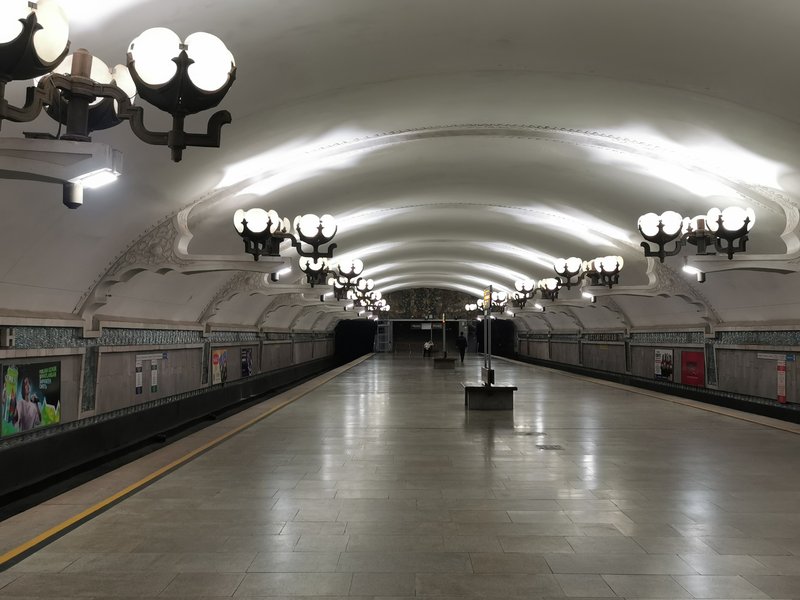
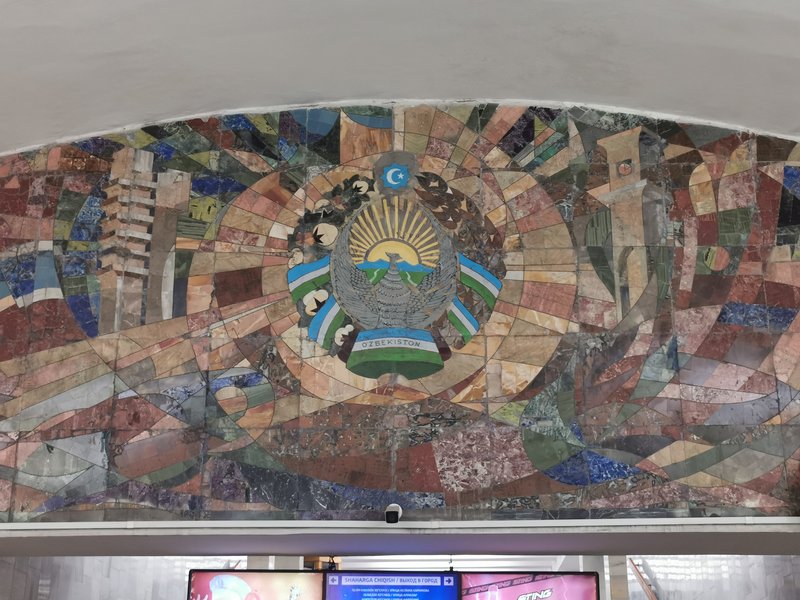
Compared to other stops, Tashkent's metro station O’zbekiston is a bit less spectacular. Nevertheless, it offers some beautiful elements with a background history. Already, when approaching the entrance, you will spot the large mosaic referring to the Uzbek nation and the country's colours. Inside, above the platform, you will look at a white vault without any columns. From the sides, chandeliers with round lamps intrude into the hall.
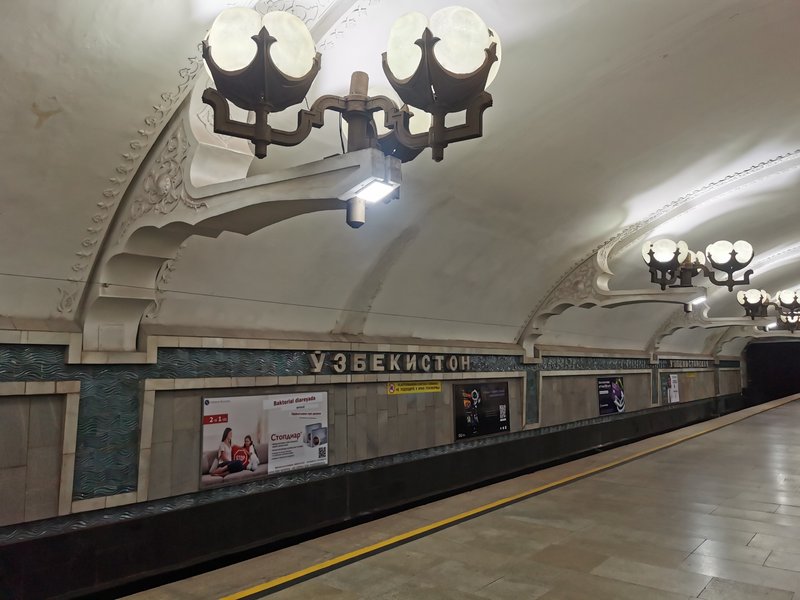
The individual lamps remind one of cotton bolls carried by metal gripper arms, a reference to what is probably the country's most important economic product. Matching this, turquoise ceramic bands run underneath, contrasting with the marble and representing Uzbekistan's complex irrigation systems built in Soviet times.
This metro station in Tashkent was opened in 1984 as part of the O’zbekiston line between Kosmonavtlar and Alisher Navoiy. Therefore, it is the perfect location for a little stopover during sightseeing trips.
Location: O'zbekiston
9. Toshkent
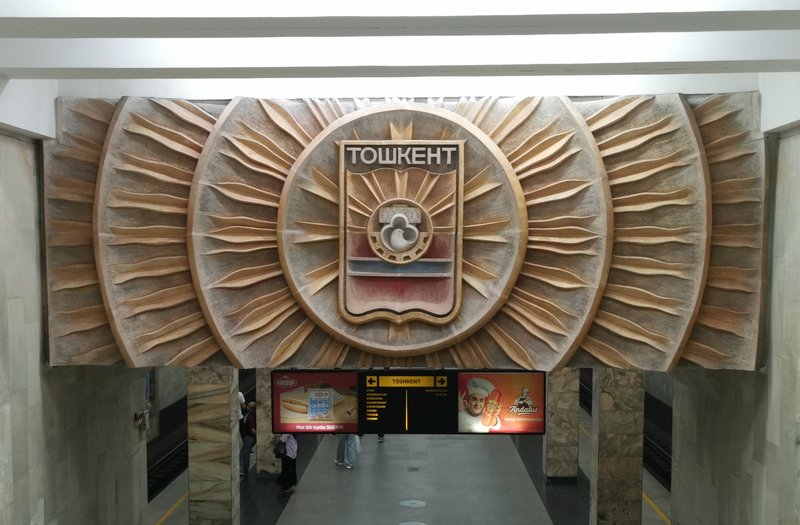
Toshkent was opened together with O’zbekiston in December 1984, and the name of this metro station in Tashkent refers to the main railway station nearby. This stop is also part of the O’zbekiston line and fascinates you with its unusual colours.
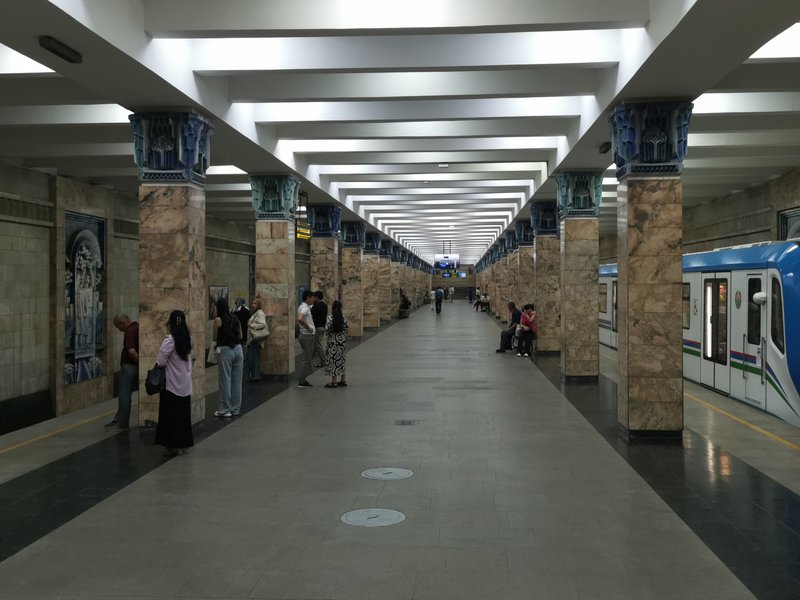
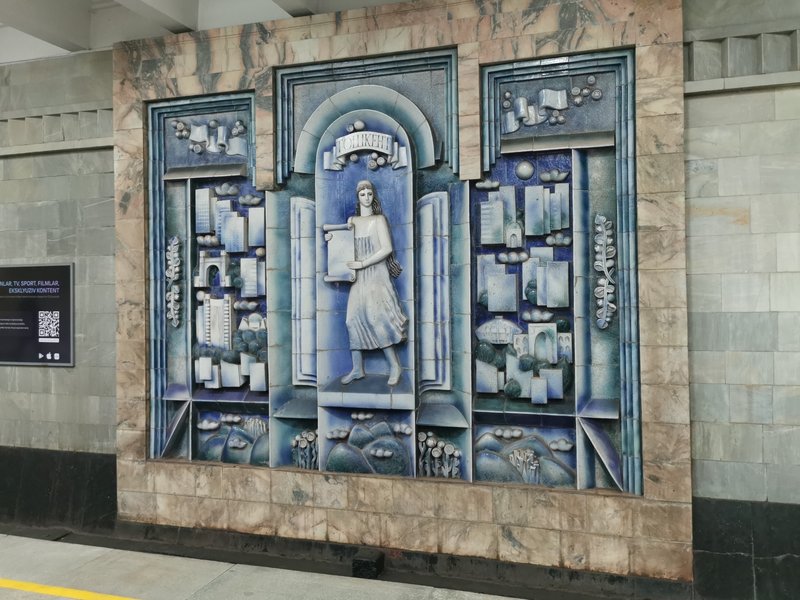
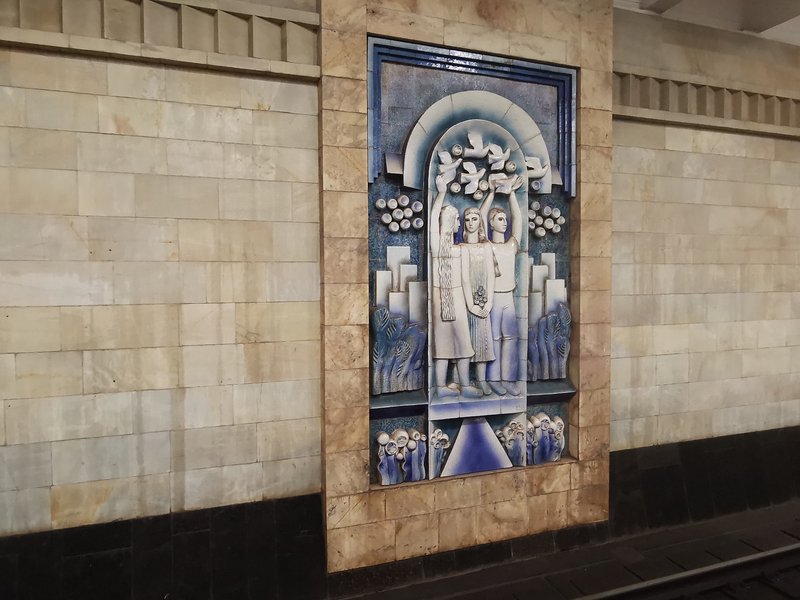
The rectangular columns and walls are primarily made of yellowish-orange marble. The pillars are topped with ceramic capitals in vibrant turquoise, green, and blue. The walls feature ceramic pictures in similar colours, celebrating the founding and existence of Tashkent. In addition, the city's coat of arms at the platform entrance invites visitors to explore the metropolis.
Location: Toshkent
10. Beruniy
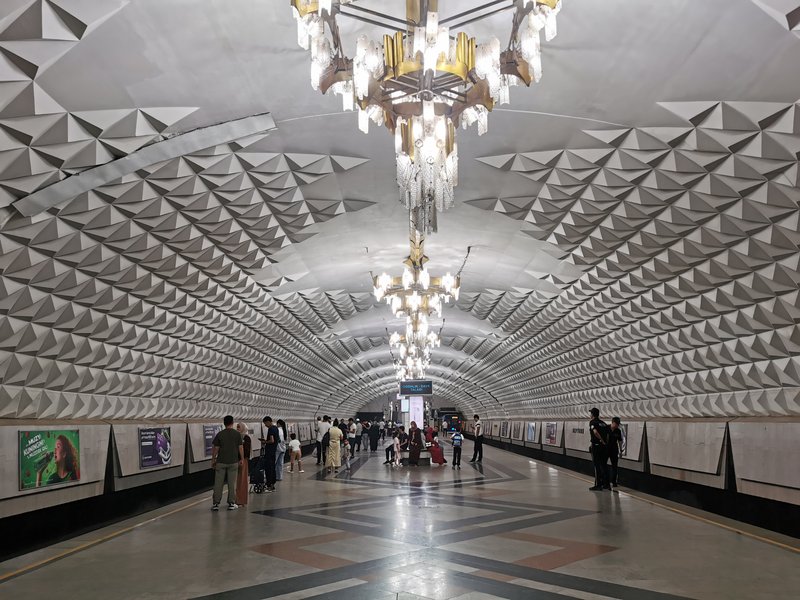
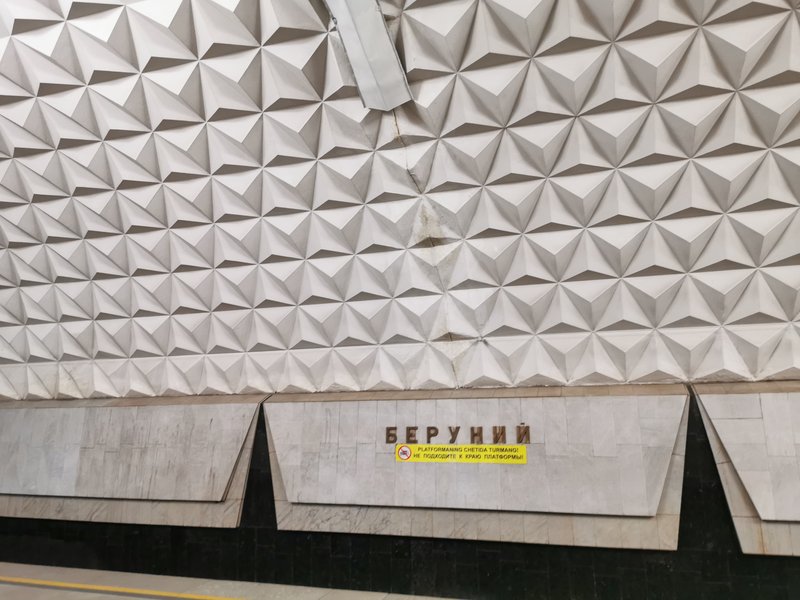
Beruniy is one of the more modern stations of Tashkent's metro, but still reaches back to the architectural traditions of the Soviet Union. Opened in April 1991, it is the last stop of the O'zbekiston line. What's quite peculiar is the large white vault reaching across the white hall without any columns. The triangular elements on the wall and ceiling create a three-dimensional effect, which makes the station unique.
In the middle of the ceiling, crystal chandeliers hang far into the center of the hall and get your attention with a golden metallic shine as well as warm white light. All in all, Beruniy is one of the more modern metro stations in Tashkent and looks distinctively different from other stops.
Location: Beruniy