
Published on May 5, 2026
To put it bluntly right from the start: visiting the Pablo Escobar museums in Medellín run by the family of the former drug lord is not worth it. The so-called experiences come with an outrageously high price tag, while what you get in return isn't enough. Anyone who wants to genuinely learn about the Medellín Cartel, Escobar, the drug wars, and their victims - rather than be exposed to glorification - is better off visiting places such as the Museo Casa de la Memoria or the Parque de Inflexión.
What is the Museo Pablo Escobar?
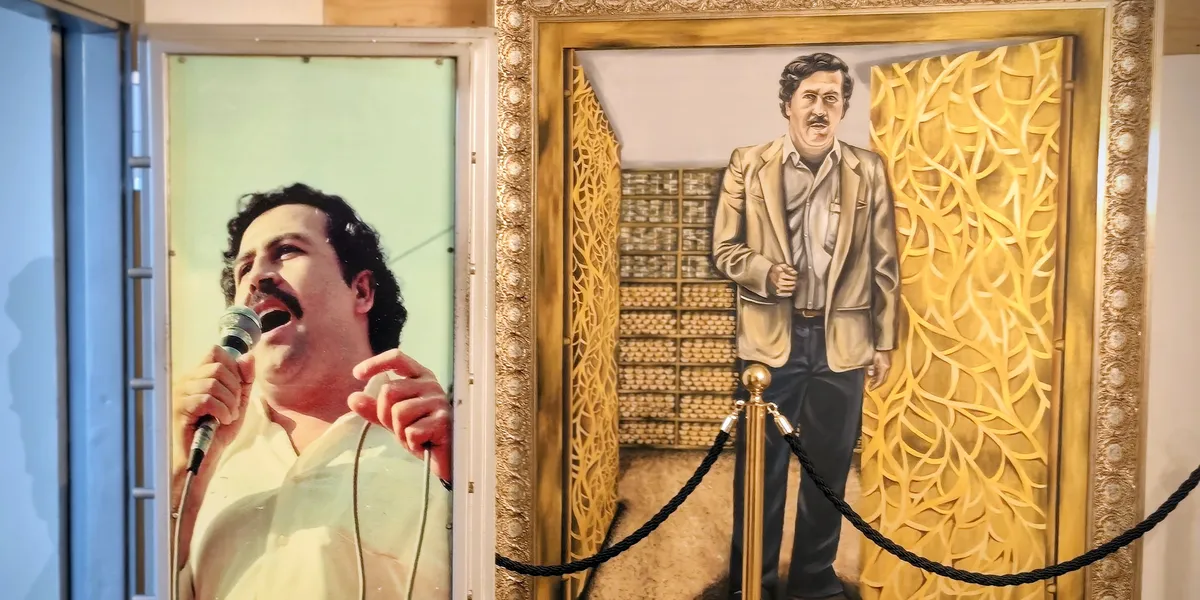
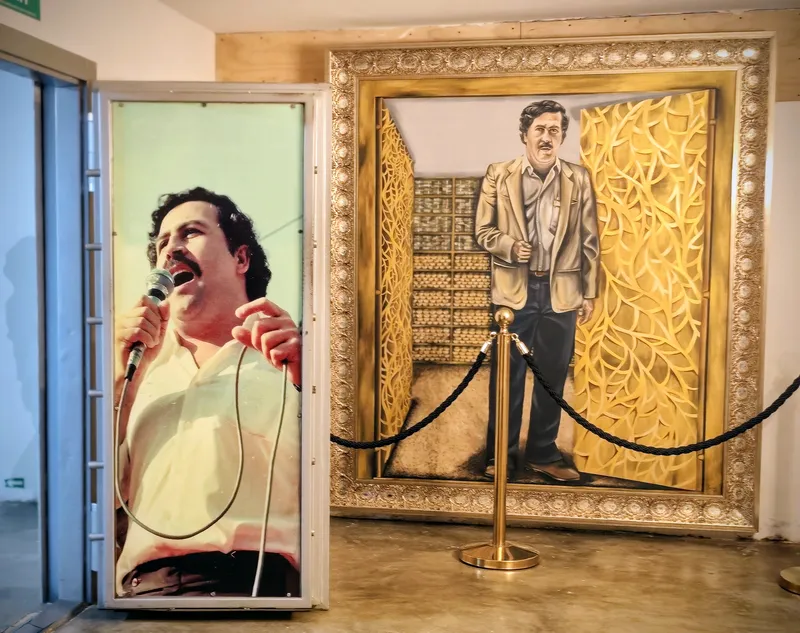
The Museo Pablo Escobar is (supposedly) located in one of the former homes of the infamous drug lord of Medellín. That naturally makes it sound like a fascinating place to explore the rooms where he once lived and view what are claimed to be original artifacts from his life.
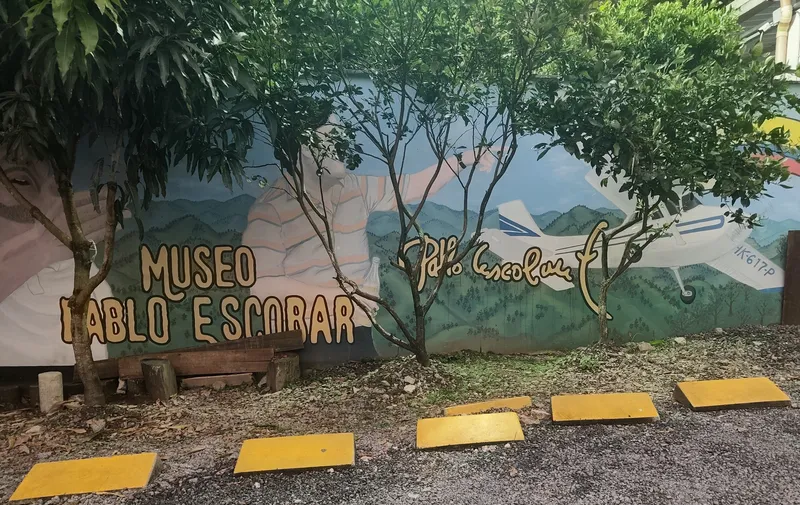
The museum is run by one of Pablo Escobar's nephews. Visitors encounter him among the family photographs on display. It is briefly explained that he also works with victims of the cartel, among other initiatives. However, it remains unclear, what this cooperation involves exactly.
There's also no note that a part of the rather high entrance fee would go to the victims or help to prevent future drug wars. This could have convinced me a bit more about the integrity of this institution. In reality though, their intentions stay a bit in the dark.
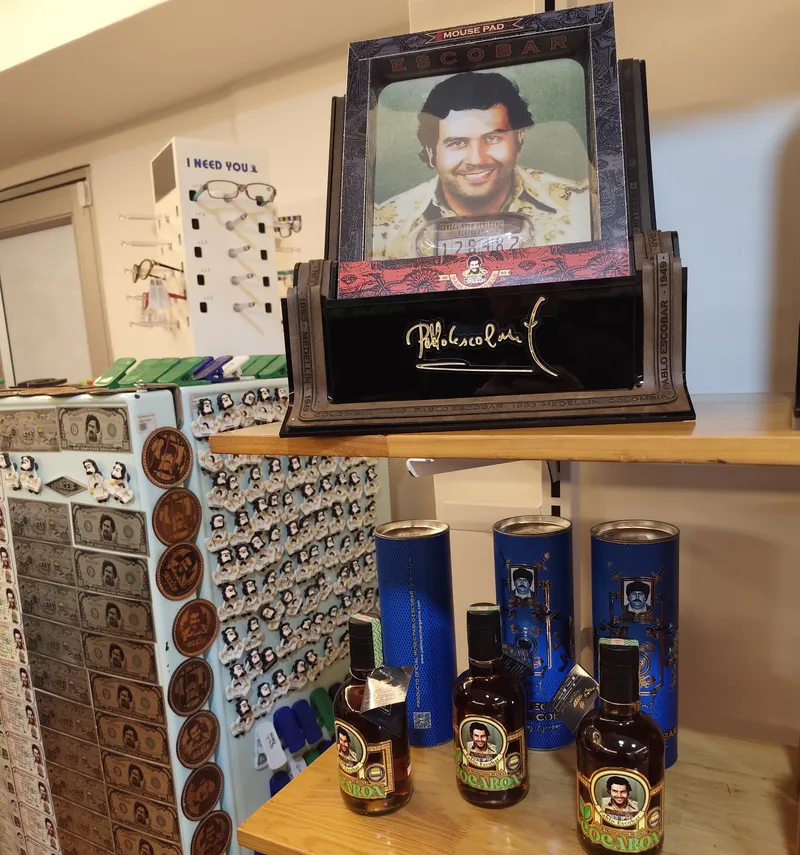
The merchandise on sale - ranging from trendy shot glasses to extravagant mouse pads - hardly suggests any serious attempt at historical reflection. Somehow, you learn almost nothing about Escobar's actual crimes, the scale of his criminal empire, or even the circumstances of his death.
How Much Does a Tour in the Pablo Escobar Museum Cost?
The standard admission fee is 148,000 Colombian pesos, equivalent to almost €35 or US$40. Strangely enough, if you present your passport, you receive a small discount and pay 139,000 COP, or about €32.
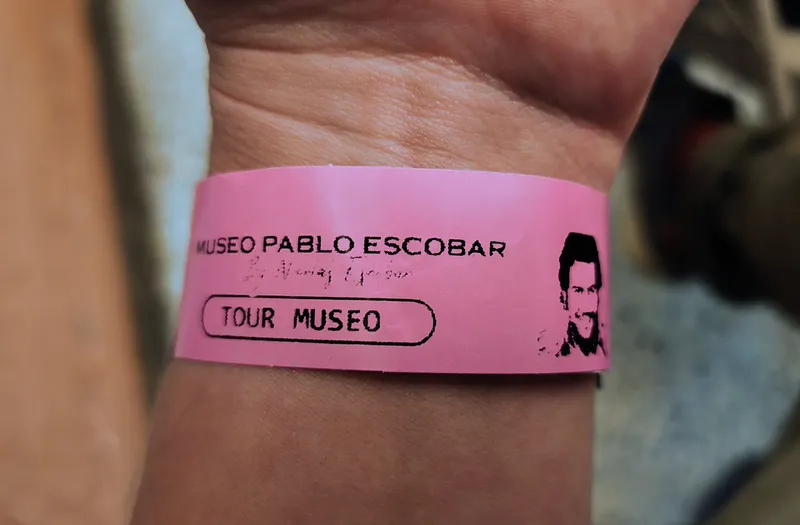
The museum advertises a 45-minute "experience." To reinforce this idea, visitors receive a wristband as their ticket, creating the impression of an immersive attraction. While the museum is interesting enough to visit, I don't think it justifies the price.
What Is Included in the Tour of the Pablo Escobar Museum in Medellín?
The tour begins in front of a bookshelf. Since visitors are not allowed to explore the exhibition on their own, your guide asks you to say the magic words: "El Patrón," Escobar's infamous nickname. A hidden door then opens in the gift shop, leading into what are said to be the former living quarters.
Most of what you'll find inside is a gallery of reproductions, artwork, and photographs. The original furnishings have presumably been lost over time. One of the more interesting parts is the overview of Pablo Escobar's life, from his childhood to his death at the age of 44. Visitors are also shown a secret passage and several safes that he supposedly used, complete with what is claimed to be his authentic signature.
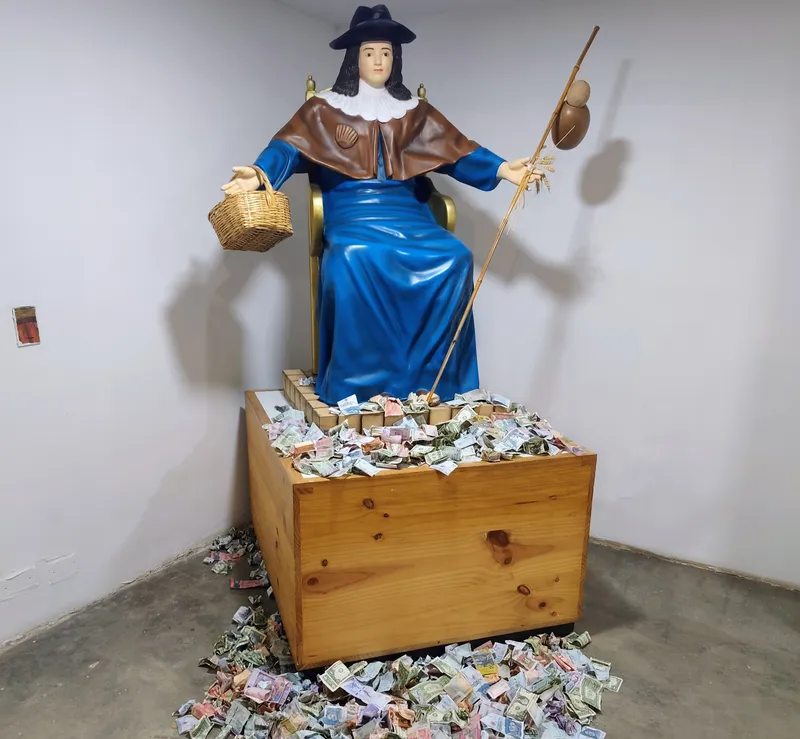
After that, the guide points out a religious statue with a basket in which guests were expected to throw banknotes. According to the story, anyone who landed their bill inside the basket got to keep all the money that missed the target. Following this, the tour already continues to the outside area with a collection of several of Pablo Escobar's vehicles. One interesting anecdote concerns his motorcycle, which was apparently so loud that people could hear it from a distance. Two of his Mercedes sedans also display bullet impacts in their supposedly bulletproof windows, although it is never made entirely clear whether these vehicles are originals or replicas.
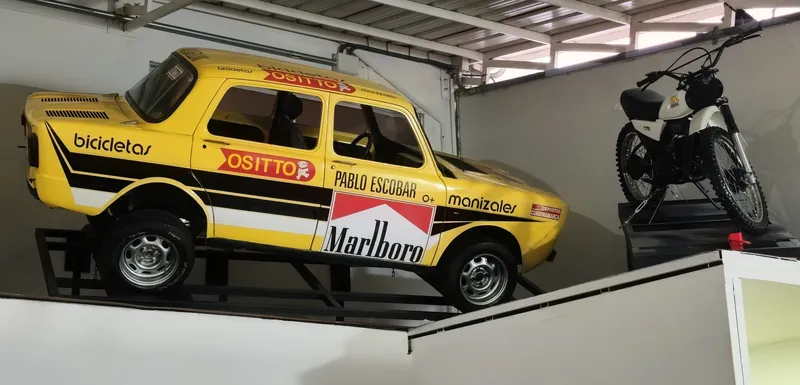
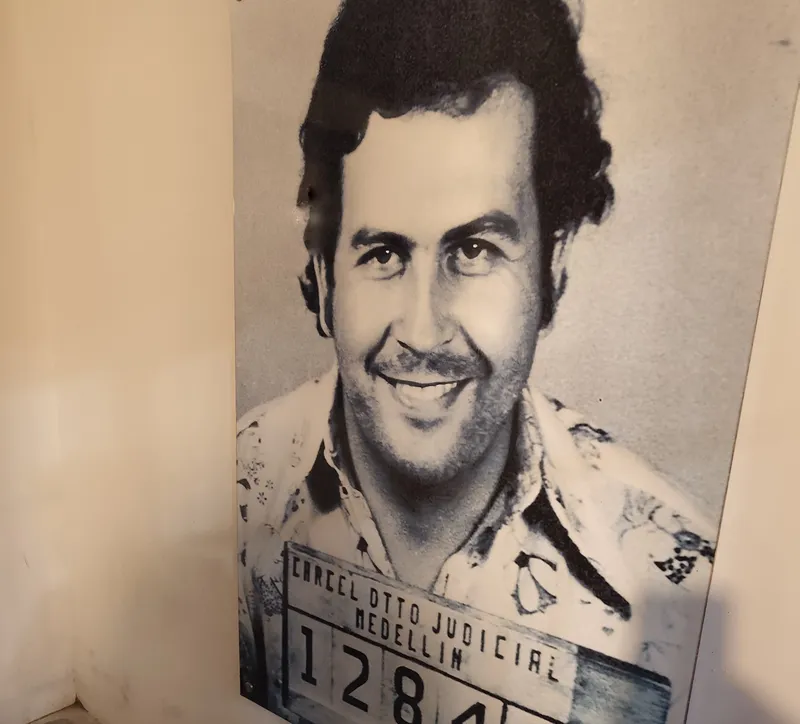
Nearby, visitors find a flight simulator and several aircrafts that were allegedly used to transport drugs via Cuba to the United States. After seeing a few more iconic photographs - including Escobar's mugshot and an image from his time in prison - the tour is already over. In my opinion, it falls well short of the advertised 45-minute experience.
Location: Museo Pablo Escobar
Opening hours: daily 09:00-17:00 Uhr
Fee: 148.000 COP (139.000 COP with discount) – around 32-35 euros
Website: https://www.pabloescobargaviria.com/
Beyond Escobar – the Museum Run by the Niece
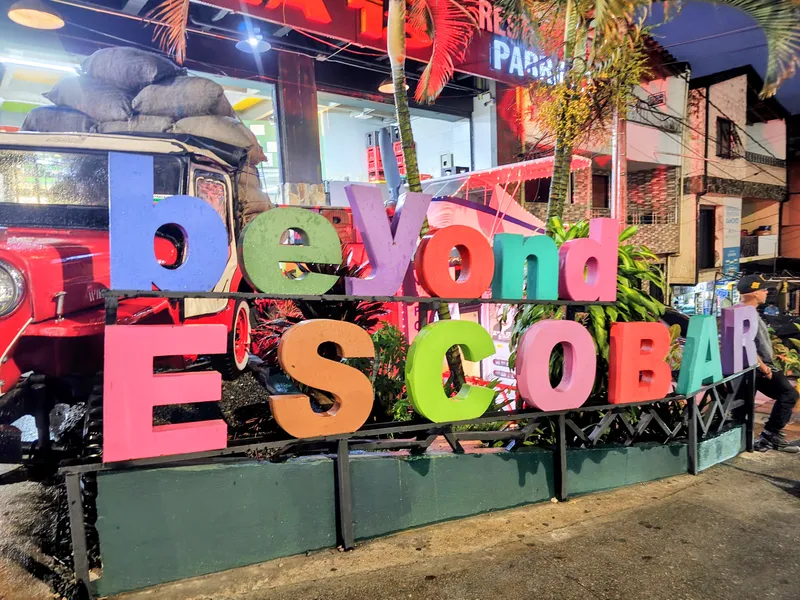
A few days after my visit to the Museo Pablo Escobar, I was walking through the famous Comuna 13 neighbourhood, once one of the most dangerous places in Medellín and now a popular tourist destination. At the end of the tour, I met a man who claimed to work for another Escobar museum called Beyond Escobar, supposedly located in one of the former homes of the drug lord.
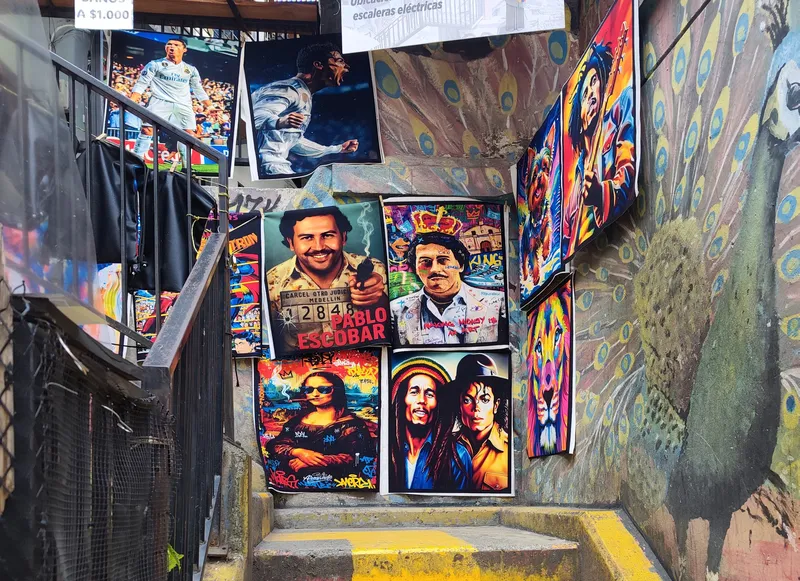
The whole story struck me as somewhat odd, not least because Pablo Escobar had very little historical connection to Comuna 13. It became even stranger when the man described the exhibits, claiming they were all originals and virtually identical to those displayed at the Museo Pablo Escobar. As if that were not enough, this museum was also said to be operated by a member of the family - this time Escobar's niece. Unsurprisingly, the admission prices were similarly high, starting at 120,000 pesos (around €28).
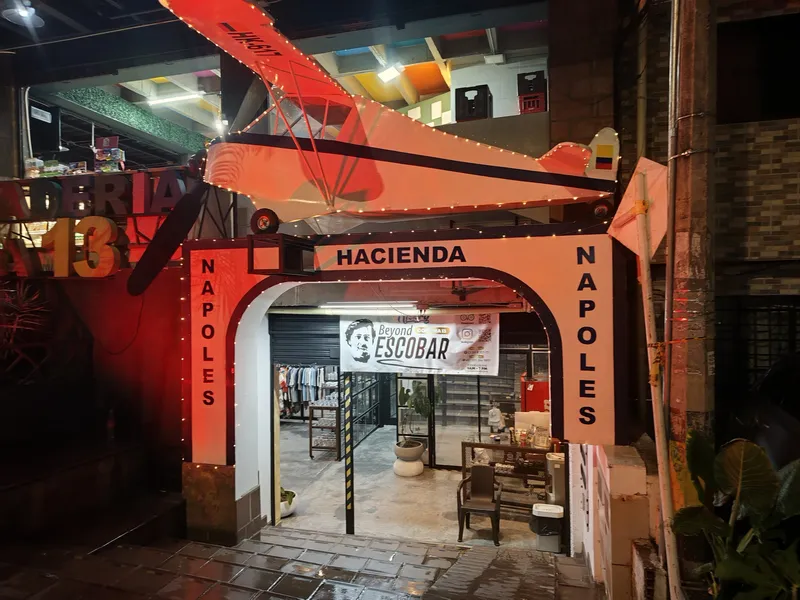
The museum is easy to spot thanks to the large mural depicting Hacienda Nápoles, Escobar's famous country estate - which was actually the reason I initially stopped there.
Location: Beyond Escobar
Opening hours: täglich 09:00-19:00 Uhr
Fee: 120.000 COP (around 28 euros)
➜ If you want to learn more about Comuna 13, I can recommend you the following tour by Beyond Colombia with a deeper look into the life inside the community. Follow the affiliate link to find the best offer on GetYourGuide.
Museo Pablo Escobar and Beyond Escobar – Real, Fake or Money for the Family?
In the end, it remains difficult to determine what is authentic, what is exaggerated, and what is primarily designed to generate money. In several conversations with locals, Escobar's descendants were viewed rather critically. Many believe they continue to capitalise on the Narcos-driven fascination with Pablo Escobar—a trend that many tourists eagerly buy into.
The result is a range of rather bizarre Escobar-themed tours, some of which end with visitors laying flowers on his grave or even snorting lines of cocaine from his memorial stone. Unsurprisingly, this is deeply unpopular with many residents of Medellín.
For locals, the name Pablo Escobar does not evoke fascination but painful memories: bomb attacks, targeted assassinations, violence in the streets, and conditions resembling urban warfare. For that reason, it is worth checking in advance who is behind a museum, memorial site, or guided tour.
Fortunately, Medellín offers many alternative places that examine the cartel era from the perspective of its victims. When it comes to guided tours, I believe Beyond Colombia does an excellent job by presenting this history in a thoughtful and reflective way.
➜ I personally went on a tour with Beyond Colombia. If you really want to learn something about the conflict, you can join the shared experience about Escobar and violence in Medellín, available via this affiliate link on GetYourGuide.
Which Alternative Places Can I Visit For a Pablo Escobar Experience in Medellín?
Although the Pablo Escobar Museum is, in principle, interesting because it is said to be located in one of his former homes, I don't think it is worth visiting given the high admission price. Even the souvenirs are extremely expensive, with simple refrigerator magnets starting at around €10. One alternative would be to visit the attached bar, which at least allows you to experience the atmosphere of the original location.
Fortunately, there are several other places in Medellín that tell the story of Pablo Escobar in a much more meaningful way. These include the Casa de la Memoria, which focuses on the victims' perspective, the Parque Conmemorativo Inflexión, and Escobar's grave in Itagüí.
Casa de la Memoria – the Perspective of the Victims
If you genuinely want to learn about Colombia's drug wars and their devastating impact on society, you should visit the Casa de la Memoria. Unlike the Museo Pablo Escobar or Beyond Escobar, this museum does not glorify the drug lord. Instead, it focuses entirely on the human consequences of the violence that held Medellín hostage more than 30 years ago.
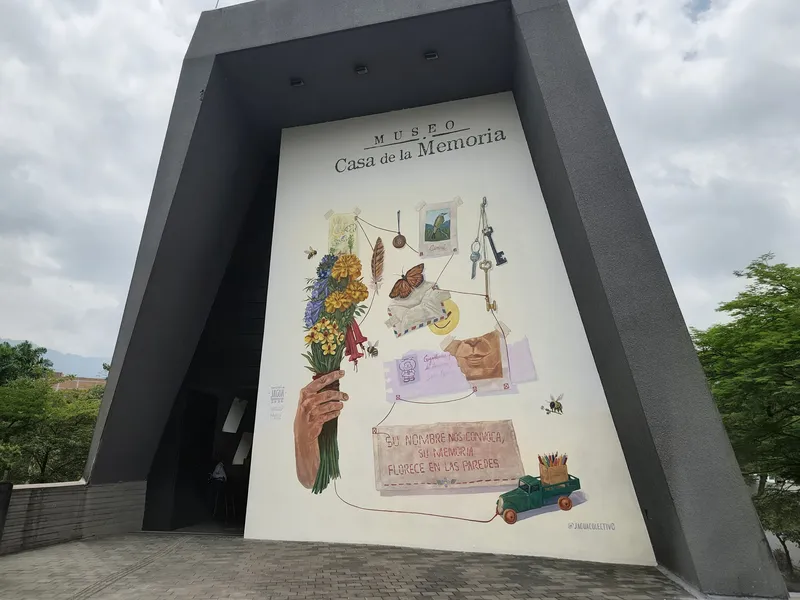
The immersive exhibition is housed in a striking black concrete building in the Boston neighbourhood. It begins with a series of quotations, while interactive touchscreens allow visitors to explore different topics in greater depth. One particularly useful feature is an interactive map showing memorial sites throughout Medellín. Selecting a location opens an information panel explaining its historical significance.
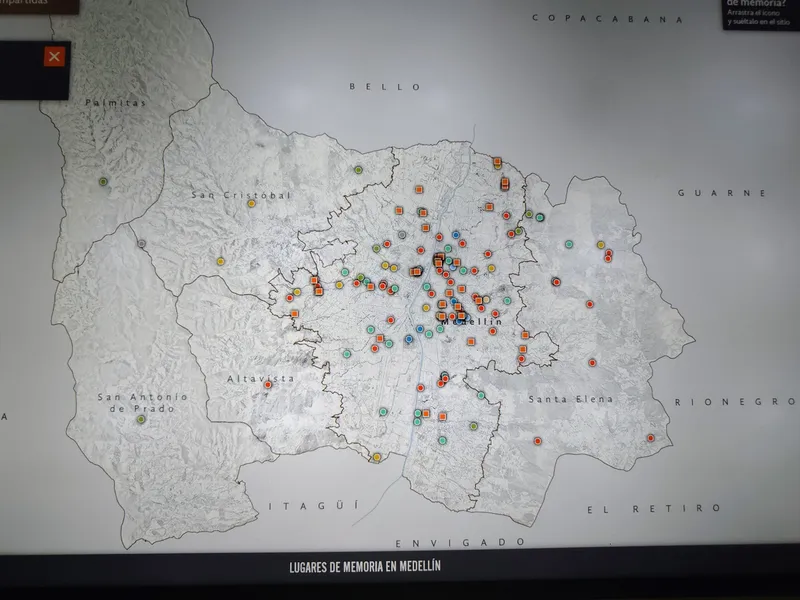
In addition to informative displays covering subjects such as journalism, women, sexual violence, and the desaparecidos (the disappeared), the museum also presents artistic interpretations of the conflict, many of which are displayed under glass.
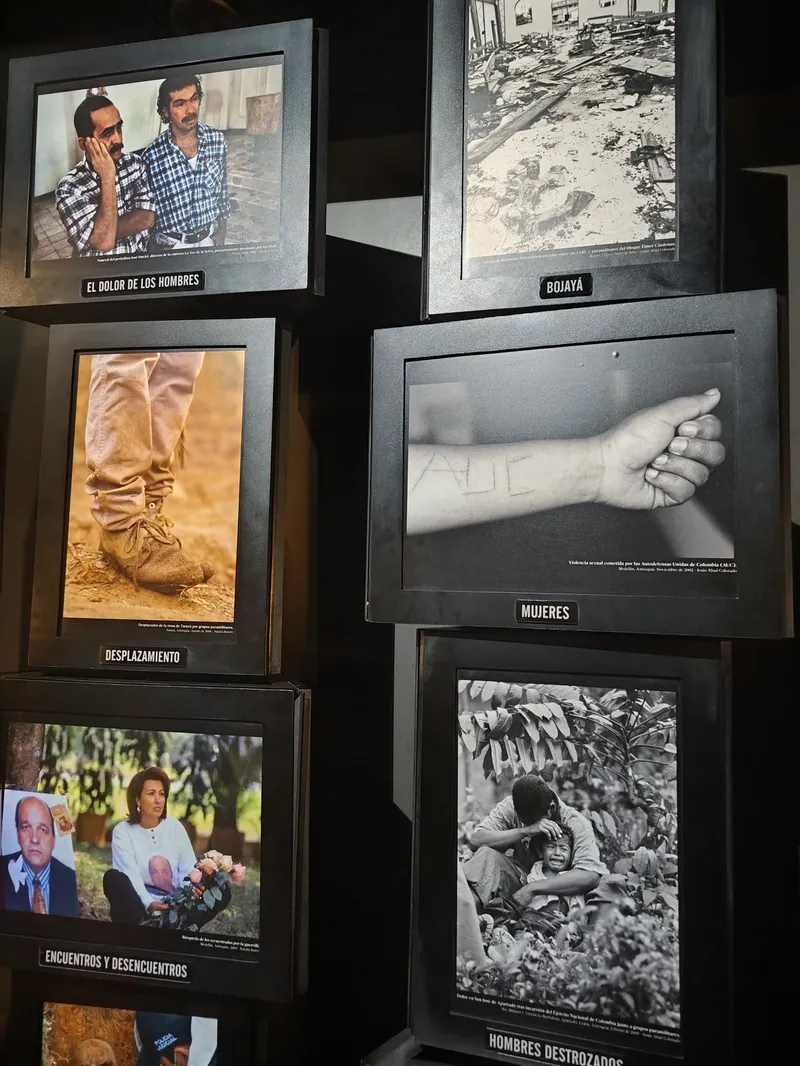
Overall, it is a deeply moving exhibition. The only drawback is that most of the information is available only in Spanish. While the main displays are easy enough to follow, reading the more detailed documents and using the interactive screens can be challenging for visitors with limited Spanish skills.
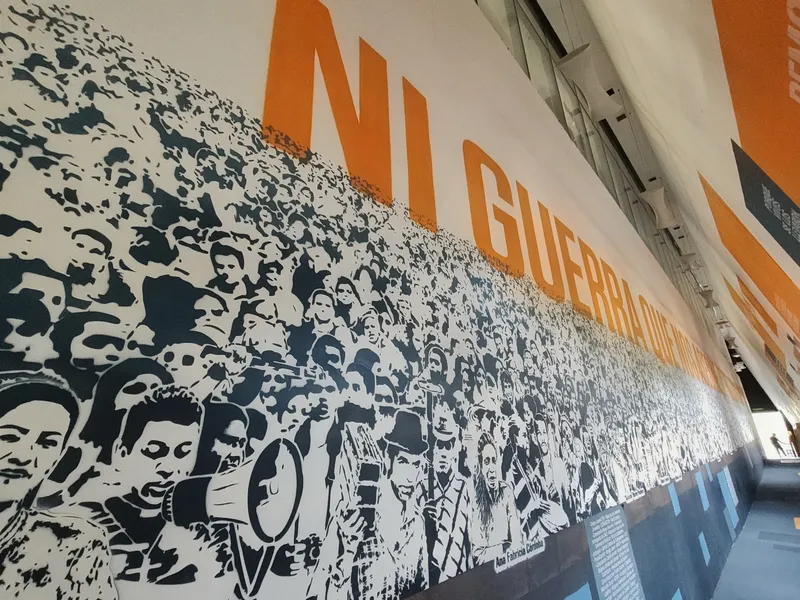
On the other hand, admission is completely free. Visitors simply need to complete a brief registration using the museum's app.
Location: Casa de la Memoria
Opening hours: Tue-Fri 09:00-18:00, Sat-Sun & holidays 10:00-16:00
Fee: free
Website: https://www.museocasadelamemoria.gov.co/
Parque Conmemorativo Inflexión
The Parque Conmemorativo Inflexión is situated on the site where one of the Escobar family's safe houses once stood. As the conflict with the Cali Cartel went on, Pablo Escobar considered it increasingly dangerous for his wife and children to live without any further security. He therefore constructed the heavily fortified Edificio Mónaco. Despite its elaborate security measures, a massive attack occurred in January 1988 when an 80-kilogram car bomb exploded outside the building. Remarkably, "only" three people lost their lives.
In 2019, the Colombian government demolished the notorious building and replaced it with a memorial dedicated to the victims of narco-terrorism between 1983 and 1994, the Parque Conmemorativo Inflexión. The remains of Escobar's mansion were transformed into a wall made from the building's rubble.
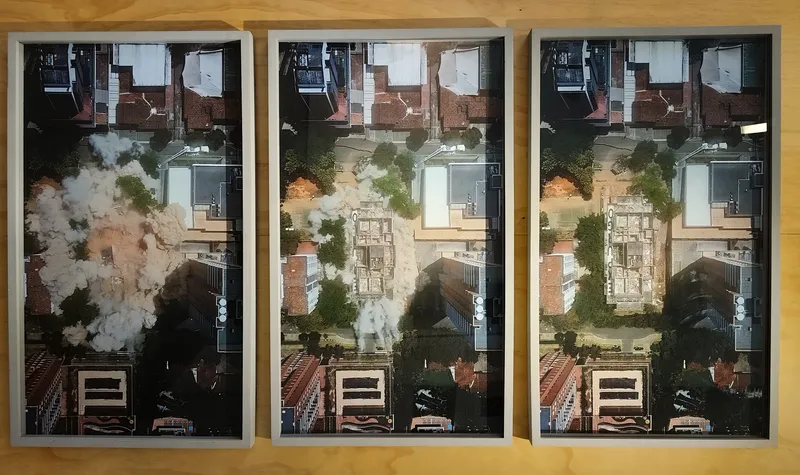
The memorial park officially opened in December 2019 and has been expanded ever since. Located in the Santa María de los Ángeles neighbourhood, it now consists of three main sections.
The Path of Heroes (Camino de los Héroes) features nine granite blocks engraved with quotations from prominent Colombians who spoke out against violence and were later murdered by the Medellín Cartel.
The Plaza de Reflexión y Memoria is dominated by a 70-metre-long and 4-metre-high granite wall containing 46,612 illuminated holes—one for each victim. After dark, the holes light up, creating a powerful visual site. More than 200 violent incidents are also documented along the southern end of the wall, complete with dates and locations.
Finally, the Forest of Resilience (Bosque de la Resiliencia) symbolises Medellín's ability to overcome pain and rebuild. Trees from every region of Colombia represent hope, renewal, and the country's commitment to peace.
Location: Parque de Inflexión
Opening hours: always
Fee: free
Grave of Pablo Escobar in Itagüí
Pablo Escobar's grave is located in the southern Medellín district of Itagüí and has become a popular destination for Narcos fans. Many guided tours finish here.
The cemetery itself is interesting from a historical perspective. However, things become rather questionable when tour operators encourage visitors to place flowers on the grave or, according to some reports, even ceremonially snort cocaine from the headstone.
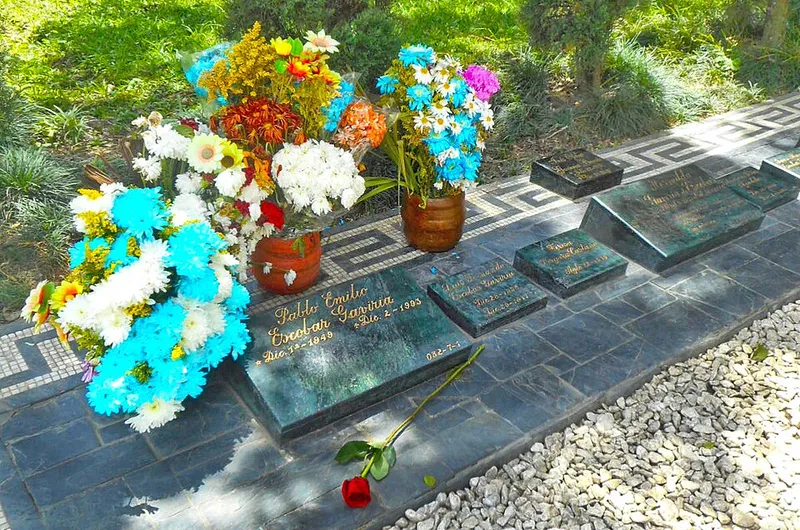
Considering that Escobar's reign of terror is estimated to have claimed more than 45,000 lives in Medellín, this kind of behavior seems quite inappropriate.
Botero Sculpture El Pájaro (Parque San Antonio)
Another powerful reminder of Medellín's violent past can be found in Parque San Antonio, where visitors encounter the shattered bronze sculpture El Pájaro by Fernando Botero, Colombia's most famous artist.
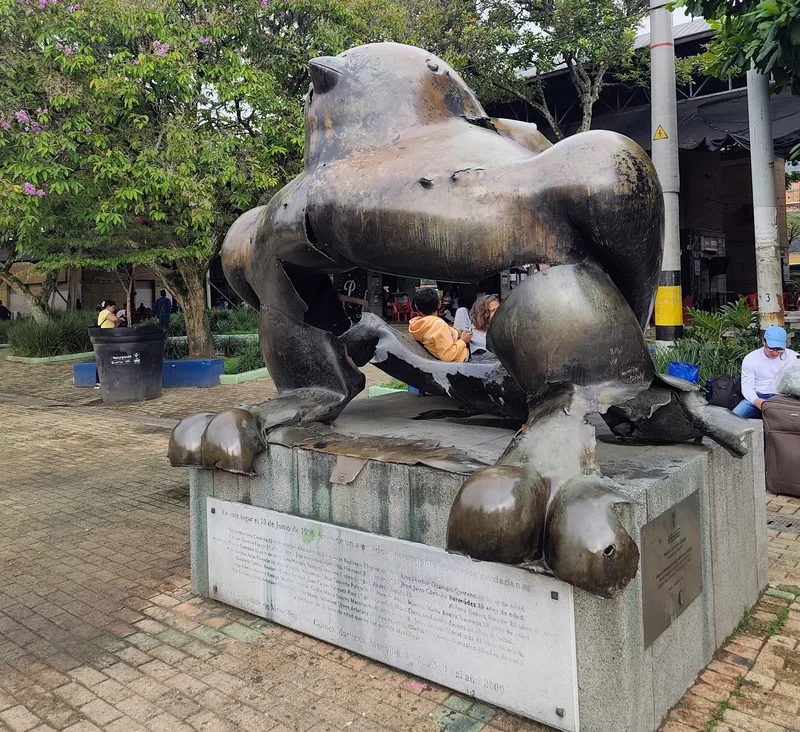
On 10 June 1995, roughly eighteen months after Escobar's death, a bomb hidden beneath the sculpture's legs exploded during a concert. Thirty people - including children as young as thirteen - were killed. To this day, no one knows who was responsible for the attack. Nevertheless, placing a bomb beneath a sculpture symbolising peace sent an unmistakable message.
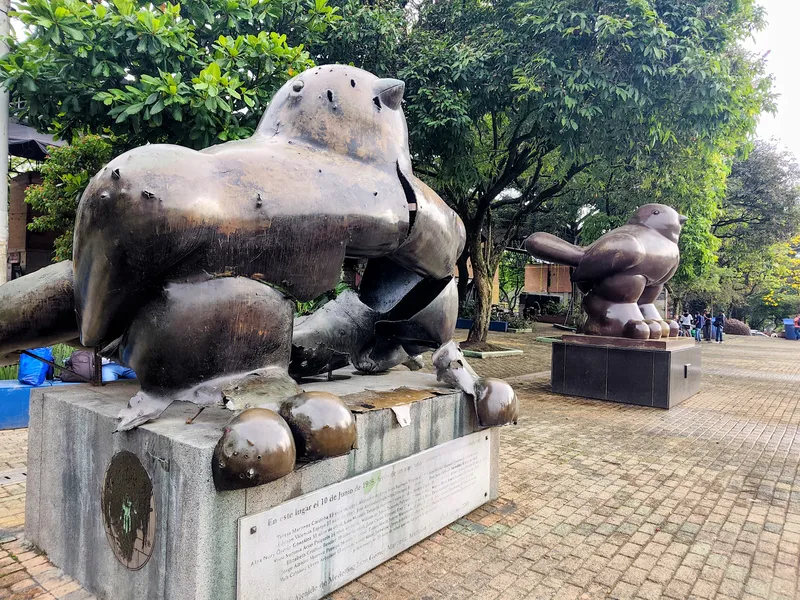
The city initially planned to remove the damaged artwork, but Botero strongly opposed the idea. He insisted that it remain as a memorial. Therefore, he donated a second, identical sculpture on the condition that the destroyed original would remain beside it. Compared with the Escobar museums and the often-glamorizing Narcos tours, this memorial conveys the reality of Medellín's violent past in a far more thoughtful and powerful way.
The Place Where Pablo Escobar Died
On 2 December 1993, Colombian authorities tracked Pablo Escobar through a phone call. As he attempted to escape across a rooftop, he was shot and killed by a special police unit. Today, the exact location of his death is included in many Pablo Escobar-themed tours. Visitors can also go there independently if they wish.
The house is located in the middle-class neighbourhood of Los Pinos and now serves as a Spanish language school. There is not much to see, but it is undeniably the site of one of the most significant moments in Colombia's modern history - the effective end of the Medellín Cartel. The exact address is Cra. 79B #45D-94. If your itinerary is already full, however, this is probably one attraction you can skip.
Hacienda Nápoles in Puerto Triunfo
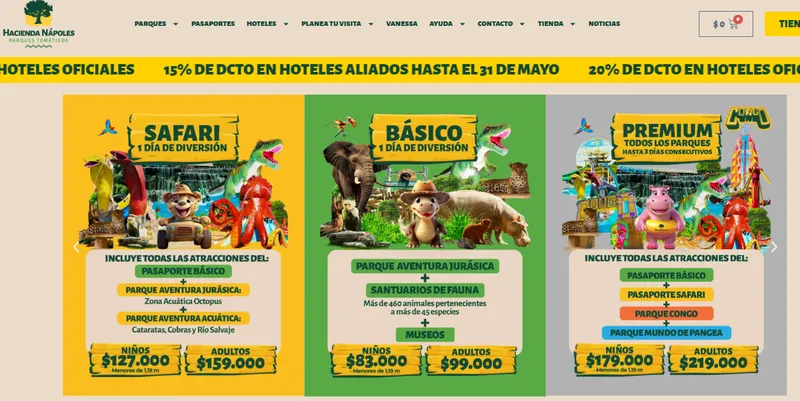
In my opinion, the modern version of Hacienda Nápoles is perhaps the most embarrassing example of how Pablo Escobar's legacy is being dealt with. Located roughly 175 kilometres east of Medellín, the estate was once Escobar's extravagant private ranch, complete with a water park, racetrack, private airport, and zoo. The hippopotamuses he imported famously escaped, reproduced in the wild, and have since become both a legend and an environmental problem for Colombia.
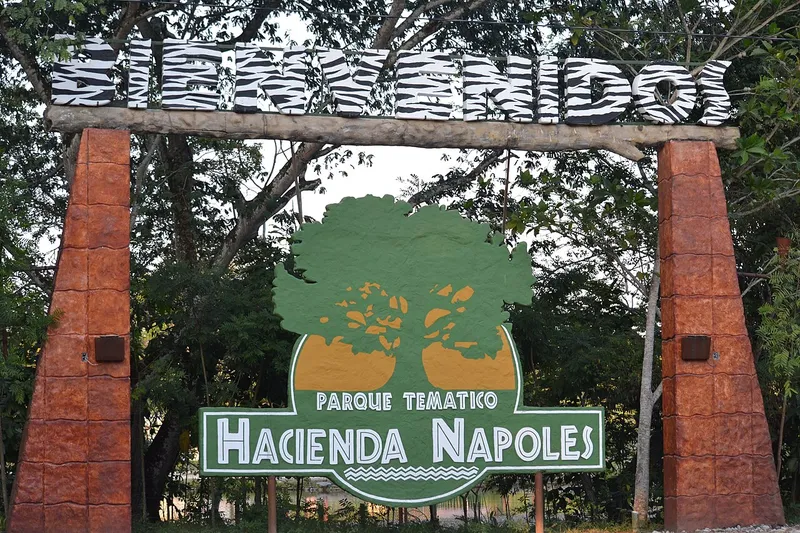
Rather than turning the estate into a place that confronts the history of narco-terrorism, the new owners transformed it into a colourful amusement park featuring rides and animals. There are very few references to its dark past - neither through historical reflection nor outright glorification. Given the 3½-hour journey from Medellín, I don't think the trip is worthwhile, although the surrounding natural scenery is certainly beautiful.
What Do People in Medellín and Colombia Think About Pablo Escobar?
Most people in Medellín and Colombia do not view Pablo Escobar positively. His name evokes painful memories of bombings, gang wars, assassinations, and a period when Medellín was considered one of the most dangerous cities in the world.
At the same time, the Netflix series Narcos has created enormous international fascination with Escobar, particularly among foreign visitors. Many Colombians find it frustrating that their country continues to be associated primarily with Pablo Escobar and cocaine, amplified by this show in particular.
That said, I also heard some locals point out that Escobar invested significant amounts of money in urban development, including green spaces, transportation infrastructure, and the local football club. Even so, these observations are almost always accompanied by the acknowledgment that more than 45,000 people died during his reign. Most residents simply want to move beyond that chapter of their history.
Does it Make Sense to Book a Tour in Medellín to Learn More About Pablo Escobar?
The popularity of Netflix's Narcos has brought huge numbers of visitors to Medellín, many of whom want to learn more about Escobar while visiting the locations associated with him.
However, if you ask Colombians directly, you are unlikely to hear many positive opinions about the series. Most locals view that period with grief and anger. They also point out that, despite its production quality, Narcos is far from historically accurate. One common criticism is that the lead actor, Wagner Moura, is Brazilian rather than Colombian, and that little effort was made to reproduce the distinctive Paisa accent.
If you decide to book an Escobar-related tour, it is worth researching who operates it and where your money goes. In my view, the museums run by members of Escobar's family - Museo Pablo Escobar and Beyond Escobar - are particularly questionable. Their high admission fees suggest that the Escobar name is being used primarily as a commercial brand.
Organisations genuinely committed to preserving historical memory, such as Casa de la Memoria or Beyond Colombia, generally charge nothing or simply ask for voluntary donations. Those are the places I can wholeheartedly recommend.